



How long does a lash serum take to work is the question asked most often about the category, and the answer is set by biology rather than by the formulation: visible change at weeks 6 to 8, the full result at weeks 12 to 16. The reason how long a lash serum takes to work cannot be shortened is the eyelash growth cycle, which runs on a fixed clock that no topical product resets.
This article gives the cycle in measured numbers, explains why the first month is spent on lashes too short to see, sets out what the published trials found for peptide serums and for the prostaglandin analogue they are compared with, and ends with the application method and a week-by-week timeline to hold a product to.
Lashes grow on a slow cycle, so most people stop a serum before it has had time to show.
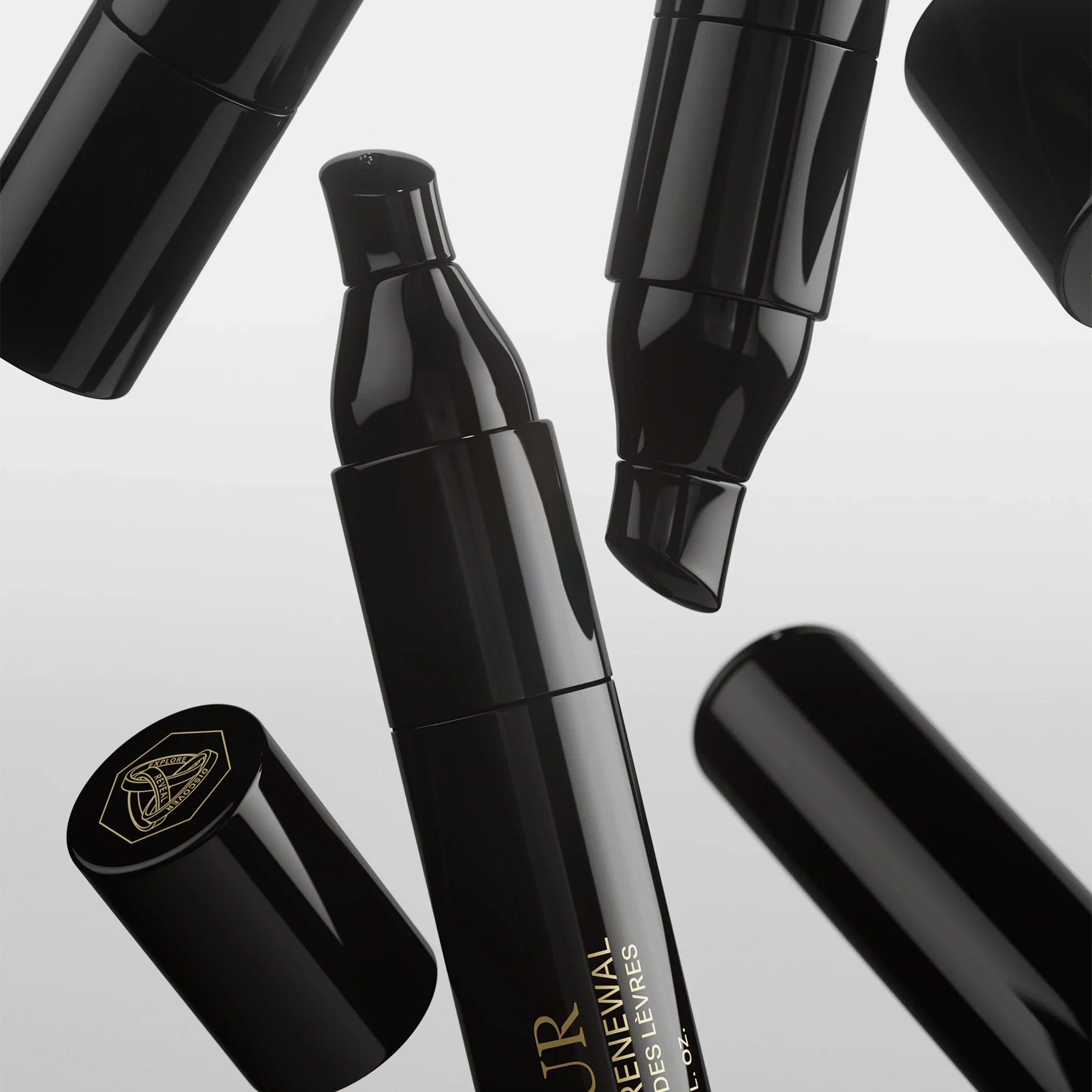
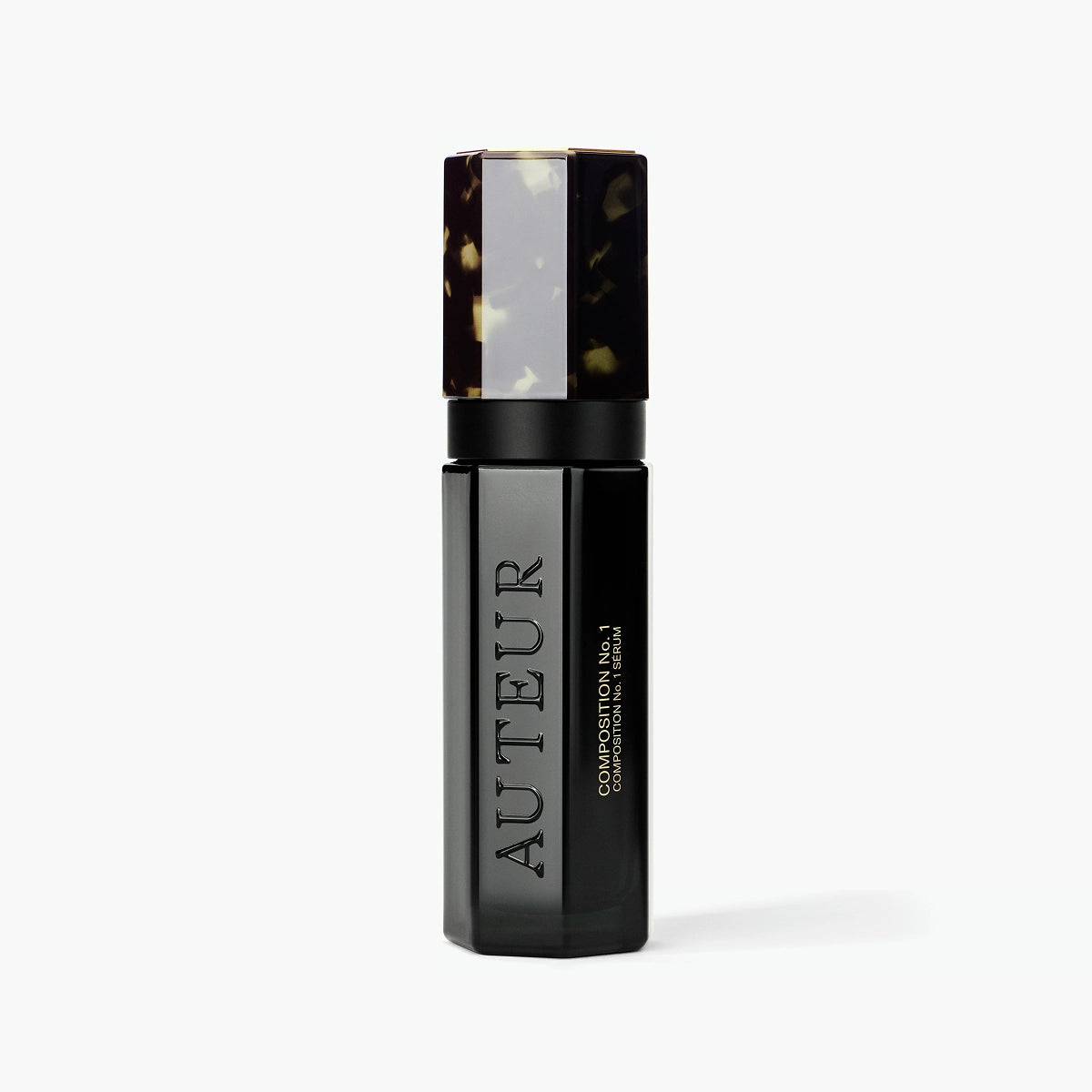
Definitive Lash Serum is a peptide formula without prostaglandin analogues or hormones. One stroke along the upper lash line each night. Change is typically noticed at weeks 6 to 8.
The lash growth cycle in numbers
An eyelash is a hair, and it follows the three-phase cycle of all hair: anagen, the growth phase; catagen, a short regression; telogen, a resting phase at the end of which the lash sheds and the follicle starts again. What differs from scalp hair is the length of each phase. Aumond and Bitton (2018), reviewing the literature on the lash follicle, give an anagen phase of four to ten weeks and a complete cycle of four to eleven months, and note that lash length rarely exceeds 12 mm because both the growth rate and the anagen phase are shorter than in scalp hair (1). The upper lid carries 90 to 160 lashes in five to six rows; the lower lid 75 to 80 in three to four rows (1).
Thibaut and colleagues (2010) measured the cycle directly, following four volunteers weekly for nine months. They calculated an anagen phase of 34 ± 9 days and a complete cycle of 90 ± 5 days, with an average growth rate of 0.12 mm a day (2). Na and colleagues (2006), using phototrichograms on 30 women, estimated anagen at about two months and found 17.8% of upper lashes in anagen at any given time (3). The two studies differ on anagen length, reflecting small samples and different methods, but agree on the practical point: at any moment, roughly four lashes in five are not growing.
Therefore the arithmetic of a lash is fixed. At 0.12 mm a day over a 34-day anagen, a lash grows about 4 mm before it stops; a longer anagen produces a longer lash. Any product that changes lash length acts on the follicle during anagen, either by extending that phase or by supporting the follicle's output within it. Nothing acts on a lash that has already stopped growing.
Why nothing shows for four weeks
Put the numbers together and the silent first month explains itself. On the night of the first application, only the lashes currently in anagen, around 18% of the fringe, can respond. A lash that enters anagen that night grows 0.12 mm a day: 0.8 mm by the end of week one, 2.5 mm by week three, 3.4 mm by week four. For all of that period it is shorter than the lashes around it and hidden beneath them. It becomes visible only when it reaches the length of the fringe, which takes five to seven weeks.
But the lashes in telogen on night one have not started at all. They shed on their own schedule, the follicle re-enters anagen, and only then does the serum have something to act on. Across a 90-day cycle, the last follicles to begin a treated anagen do so around week 12 or 13, and their lashes reach full length some weeks later. The fringe is replaced lash by lash, across one full cycle.
This is why a serum judged at week 3 will always be judged a failure, and why the published lash trials measure at week 12 or 16. The product has not been given a cycle.

What the evidence says about peptide serums
Two classes of lash serum exist. The first uses a prostaglandin analogue, of which bimatoprost 0.03% is the reference, a prescription treatment for inadequate lashes. Its mode of action, as Aumond and Bitton summarise, is to prolong the anagen phase, producing longer, thicker and darker lashes (1). The evidence for it is strong. Smith and colleagues (2012) randomised 278 subjects to once-daily bimatoprost 0.03% or vehicle on the upper lid margin: at week 16, 78.1% of the bimatoprost group showed at least a one-grade increase on the global eyelash assessment scale against 18.4% on vehicle, with significantly greater length, thickness and darkness by image analysis (4). Conjunctival hyperaemia, redness of the eye, was the one adverse event significantly more frequent on treatment (4).
The second class uses peptides, typically biotinoyl tripeptide-1 and myristoyl pentapeptide-17, with panthenol, biotin and conditioning agents, and is sold as a cosmetic. The intended mechanism is to support the follicle and the anchoring of the lash during anagen rather than to extend the phase pharmacologically. The published evidence is smaller. Fernandez-Gonzalez and colleagues (2024) ran an open-label trial of a peptide and glycosaminoglycan serum in 30 women aged 25 to 65, measuring lashes by image analysis at baseline, week 4 and week 12. At 12 weeks lash length had increased by 8.3%, lash number by 5%, width by 10.1% and volume by 14.1% from baseline, with early signs of improvement at week 4 and no adverse effects reported (5).
Those figures come with three qualifications: no vehicle control, so some change could be seasonal or regression to the mean; the trial was run by the manufacturer; and 30 subjects is a small sample. The honest summary is that a peptide serum produced measurable improvement in lash length and density at 12 weeks, at an effect size well below the prostaglandin analogue, with no adverse events in that study. The peptides article covers how signalling peptides work in skin more generally.
Therefore the choice between the two classes is about mechanism and risk, not speed. Both are judged at 12 to 16 weeks. The prostaglandin analogue produces the larger effect and carries the documented ocular side effects; the peptide serum produces a smaller effect through a milder mechanism. A separate article on the safety question follows later this month.
A lash grows 0.12 mm a day for about 34 days, and only one lash in five or six is growing on any given night. A serum cannot be seen until treated lashes outgrow the existing fringe, around week 6 to 8, and cannot be fully judged until the whole fringe has cycled, around week 12 to 16. That timeline is the same for every mechanism.
How to apply a lash serum
Apply once nightly, after cleansing, to a clean and completely dry upper lid. Remove makeup and eye cream residue first; an oily film keeps the serum off the skin where the follicles open. Draw the applicator once along the upper lash line, where skin meets the base of the lashes, inner corner to outer. Do not apply to the lower lid; closing the eyes transfers enough product by contact. Do not apply to the lashes themselves, which are dead keratin and cannot respond. Let the serum dry before eye cream, and keep the cream below the lash line; the periorbital skincare article covers placement of eye products.
Consistency is the second half of the method. Because the serum acts only on follicles in anagen, a missed week means some follicles begin a growth phase untreated, and those lashes come through shorter. The rule is every night for the first 16 weeks without exception, then two to three nights a week to maintain. Stopping entirely returns the fringe to baseline over one cycle, about three to four months, as the treated lashes shed and untreated lashes replace them.
AUTEUR Definitive Lash Serum
$122 · 5ml
A peptide lash serum formulated without prostaglandin analogues or hormones, built on biotinoyl tripeptide-1 and myristoyl pentapeptide-17 with conditioning agents to support the follicle through anagen. Applied once nightly along the upper lash line. Consistent with the published lash cycle, change is typically noticed at weeks 6 to 8 and the full result at weeks 12 to 16.
Explore the FormulationRealistic expectations, week by week
Weeks 1 to 4: nothing visible. The lashes that started on night one are growing beneath the fringe. Lashes may feel more flexible, which is the conditioning agents acting on the shaft, not growth. Do not judge the product.
Weeks 5 to 8: the first treated lashes reach and pass the length of the existing fringe. The change is at the lash line and is easiest to see against a week 0 photograph taken under the same light, so take one. The open-label peptide trial recorded early signs of improvement at week 4 and its main result at week 12 (5).
Weeks 9 to 12: one full 90-day cycle has passed. Most follicles have begun at least one anagen under treatment, and length and density approach their final state. This is where the published trials take their measurement (4, 5) and the earliest point for a fair judgement.
Weeks 13 to 16: lashes from the follicles deepest in telogen on night one reach full length. The result at week 16 is the result the serum will give; further use maintains it. From here, reduce to two or three nights a week, and expect the fringe to return to baseline within three to four months if application stops.
None of these intervals can be compressed. A serum that promises visible change in two weeks is describing either a conditioning effect on existing lashes or something the cycle does not permit.
Frequently Asked Questions
How long does a lash serum take to work?
Visible change typically appears at weeks 6 to 8 and the full effect at weeks 12 to 16. A lash grows about 0.12 mm a day and only around 18% of lashes are growing at any time, so the first weeks are spent on lashes too short to see.
Why does a lash serum not work for me after 3 weeks?
Three weeks is too early. A lash that entered its growth phase on day one is about 2.5 mm long at week 3 and sits beneath the existing fringe. Keep applying once nightly without gaps.
Do peptide lash serums work as well as prostaglandin serums?
No. In a vehicle-controlled trial of bimatoprost 0.03%, 78.1% of subjects improved by at least one grade at 16 weeks against 18.4% on vehicle. A 2024 open-label trial of a peptide serum found lash length up 8.3% at 12 weeks: a milder effect with a smaller evidence base.
What happens if you stop using a lash serum?
Lashes grown during use shed at the end of their 90-day cycle and are replaced by lashes grown without the serum, so the fringe returns to baseline over three to four months. Two to three applications a week maintain the result.
Should a lash serum be applied to the lower lashes?
No. Apply it only to the upper lash line, once nightly on a clean, dry lid. The lower lid receives enough product by contact when the eyes close.
References
1. Aumond, S., Bitton, E. (2018). The eyelash follicle features and anomalies: A review. Journal of Optometry, 11(4), 211-222.
2. Thibaut, S., De Becker, E., Caisey, L., et al. (2010). Human eyelash characterization. British Journal of Dermatology, 162(2), 304-310.
3. Na, J.I., Kwon, O.S., Kim, B.J., et al. (2006). Ethnic characteristics of eyelashes: a comparative analysis in Asian and Caucasian females. British Journal of Dermatology, 155(6), 1170-1176.
4. Smith, S., Fagien, S., Whitcup, S.M., et al. (2012). Eyelash growth in subjects treated with bimatoprost: a multicenter, randomized, double-masked, vehicle-controlled, parallel-group study. Journal of the American Academy of Dermatology, 66(5), 801-806.
5. Fernandez-Gonzalez, P., Truchuelo-Díez, M.T., Gómez-Sánchez, M.J. (2024). Open clinical trial evaluating the efficacy of a novel eyelash growth enhancer with peptides and glycosaminoglycans. Journal of Cosmetic Dermatology, 23(6), 2170-2180.