



Prostaglandin lash serum side effects are documented in the ophthalmology literature in more detail than most buyers realise, because the same molecules were glaucoma drugs before they were lash treatments. The side effects of a prostaglandin lash serum follow from its mechanism, and a peptide lash serum exists because that mechanism is not the only way to support a follicle.
This article explains how prostaglandin analogues lengthen lashes, sets out the adverse events recorded in the bimatoprost trials and in longer ophthalmic use, covers the cosmetic analogues sold without prescription, and describes the peptide approach honestly, including its smaller evidence base.
Prostaglandin lash serums lengthen lashes, and carry documented side effects around the eye.
Definitive Lash Serum works with peptides. No prostaglandin analogues of any kind, no hormones. Applied once nightly.
How prostaglandin analogues lengthen lashes
Bimatoprost 0.03% was developed as an eye drop to lower intraocular pressure in glaucoma. Patients grew longer, thicker, darker lashes, an effect reported in 12.6% to 35.7% of patients in the glaucoma trials (1). The same solution was then approved in the United States, applied to the upper lid margin, for hypotrichosis of the eyelashes (1). A side effect became an indication.
The mechanism is pharmacological. Prostaglandin F2α receptors are expressed in several layers of the lash follicle during anagen, and bimatoprost prolongs anagen, so the lash grows for longer before it stops; pigmentation increases alongside (1). The lash cycle article gives the baseline: anagen of about 34 days at 0.12 mm a day, which a prostaglandin analogue extends rather than accelerates.
The efficacy evidence is strong. Smith and colleagues (2012) randomised 278 subjects to once-nightly bimatoprost 0.03% or vehicle for five months. At week 16, 78.1% of the bimatoprost group showed at least a one-grade improvement on the global eyelash assessment scale against 18.4% on vehicle, with greater length, thickness and darkness by image analysis (2). Law (2010) reports a mean length increase of 25% against 2% on vehicle in the same trial (1). Therefore the question for this class is not whether it works, but what else the receptor does when stimulated every night for months.
The documented side effects
In the lash trial itself, the adverse event profile was modest. The prescribing information lists eye pruritus, conjunctival hyperaemia and skin hyperpigmentation as the most common reactions, at approximately 3 to 4% of subjects, with ocular irritation, dry eye symptoms and eyelid erythema each below 4% over four months (3). Smith's trial found conjunctival hyperaemia the only event significantly more frequent on treatment than vehicle (2). The same label warns that iris pigmentation, although not reported in the lash studies, is a known effect of the molecule in the eye and is likely to be permanent (3).
The longer record comes from ophthalmic use, where the drop goes into the eye and the dose reaching tissue is higher. Law's review puts conjunctival hyperaemia at 42% to 46% of glaucoma patients on bimatoprost, with 1% to 4% discontinuing because of it, and describes periocular darkening appearing at three to six months and resolving three to twelve months after stopping (1).
The effect that matters most for a cosmetic user is structural. Filippopoulos and colleagues (2008) described five glaucoma patients treated in one eye for up to four years, in whom the treated side showed periorbital fat atrophy, a deepened upper eyelid sulcus, a sunken eye and loss of lower lid fullness, confirmed against old photographs as new and only partially reversible after withdrawal (4). The pattern is now called prostaglandin-associated periorbitopathy. Kucukevcilioglu and colleagues (2014) looked for it in 105 patients treated in one eye for more than a month, the other eye as control, and found some sign in 93.3% of bimatoprost users, with upper lid sulcus deepening in 80%, against 41.4% and 15.7% on latanoprost (5). Periorbital fat loss was the first sign to appear and the most frequent.
Two cautions. The high rates come from drug placed in the eye and from a retrospective series that looked for subtle signs; the lash trial rates come from four months of use. Neither describes a serum used nightly for two years, and the long-term periorbital effect of lid-margin dosing has not been measured in a controlled trial.

Prostaglandin analogues in cosmetic serums
Bimatoprost requires a prescription; the receptor does not. Several lash serums sold as cosmetics contain other prostaglandin analogues, most commonly isopropyl cloprostenate (6), with the class mechanism and without the class trials.
Jamison and colleagues (2022) asked whether periorbitopathy appears in users of these serums. They reported a 35-year-old woman who developed thin, wrinkled, darker eyelid skin and periorbital hollowing after ten months on an isopropyl cloprostenate serum, reversing six months after she stopped, and had blinded graders score manufacturers' own before-and-after photographs for volume loss: prostaglandin serum images scored 8.2 of 19 against 2.3 for non-prostaglandin serums and 3.2 for false lashes (6). Their closing observation: the customer-facing ingredient list often does not say the active is a prostaglandin analogue (6).
But the cosmetic analogues are not demonstrated to be weaker versions of the drug. They are the same mechanism at an undisclosed potency, without the monitoring of a prescription. Therefore read a serum by its ingredient list: bimatoprost, isopropyl cloprostenate, norbimatoprost, dechloro-dihydroxy-difluoro-ethylcloprostenolamide or methylamido-dihydro-noralfaprostal. A product that delivers prescription-scale growth without a prescription has almost certainly done so with one of them.
The peptide approach and its evidence
The alternative class does not touch the prostaglandin receptor. Peptide lash serums use short signalling sequences, typically biotinoyl tripeptide-1 and myristoyl pentapeptide-17, with panthenol, biotin and conditioning agents, to support the follicle and lash anchoring during normal anagen rather than extend anagen pharmacologically. How such sequences act is set out in the formulation guide to signal peptides and neuropeptides.
The evidence for the class is smaller, and this should be stated plainly. The best available study is Fernandez-Gonzalez and colleagues (2024), an open-label trial of a peptide and glycosaminoglycan serum in 30 women aged 25 to 65, measured by image analysis at baseline, week 4 and week 12. At 12 weeks, lash length had increased 8.3%, number 5%, width 10.1% and volume 14.1%, with early change at week 4 and no adverse effects reported (7). The study had no vehicle arm and was run by the manufacturer, so its figures are an upper estimate, not a controlled effect size.
Set against bimatoprost's 25% length increase (1), the peptide result is roughly a third of the effect. In exchange it has a mechanism with no known pathway to iris pigmentation, periocular darkening or periorbital fat loss, and a published trial with nothing in the adverse events column. Long-term controlled data do not exist for either class in cosmetic use, so the comparison is between a strong effect with documented structural risk and a modest effect without one.
Prostaglandin analogues grow lashes by stimulating a receptor that also governs periorbital fat, eyelid pigment and, in the eye, iris colour. Peptide serums do not use that receptor. The first class produces about three times the measured length gain; the second a smaller gain with no documented structural side effect. The choice is about risk, not speed.
Two mechanisms side by side
| Dimension | Peptide serum |
|---|---|
| Mechanism | Peptides support the follicle within normal anagen |
| Onset | Change by week 4; measured week 12 |
| Measured effect | Length up 8.3%, volume up 14.1% at 12 weeks; open-label, 30 women |
| Documented side effects | None reported in the published trial |
| Reversibility | Baseline returns one cycle after stopping |
| Dimension | Prostaglandin analogue |
|---|---|
| Mechanism | Stimulates follicle prostaglandin F2α receptors; prolongs anagen |
| Onset | Visible week 8; measured week 16 |
| Measured effect | 78.1% improved vs 18.4% on vehicle; length up 25%, 278 subjects |
| Documented side effects | Hyperaemia, itching, eyelid darkening (3 to 4%); fat loss and sulcus deepening with longer use |
| Reversibility | Pigment reverses in 3 to 12 months; fat loss partially; iris change permanent |
The table makes the asymmetry visible. The prostaglandin column has more evidence on both sides of the ledger: better efficacy data and a longer list of documented harms. A buyer who wants the maximum effect should be under a prescriber's care with bimatoprost, not using a cosmetic analogue of unknown potency. A buyer who wants measurable improvement with no structural risk has the peptide class.
Choosing by risk tolerance
Three questions settle it. First, how much periorbital fat you can afford to lose; the sulcus deepens as the fat pad shrinks, and the look is one of age. Second, your iris colour. Law notes that mixed-colour hazel irises carry the highest risk of darkening, homogeneous blue or brown the lowest (1); the label calls the change likely permanent (3). Third, how long you intend to use it. The trial data run to five months; periorbitopathy in the glaucoma series accumulated over months to years.
A reasonable rule: if any of those answers gives you pause, the peptide class is the choice, applied once nightly to the upper lash line and judged at twelve weeks. If none does and you want the larger effect, the right route is a prescription with a clinician who can examine the lid and iris, not an unlabelled analogue in a cosmetic tube.
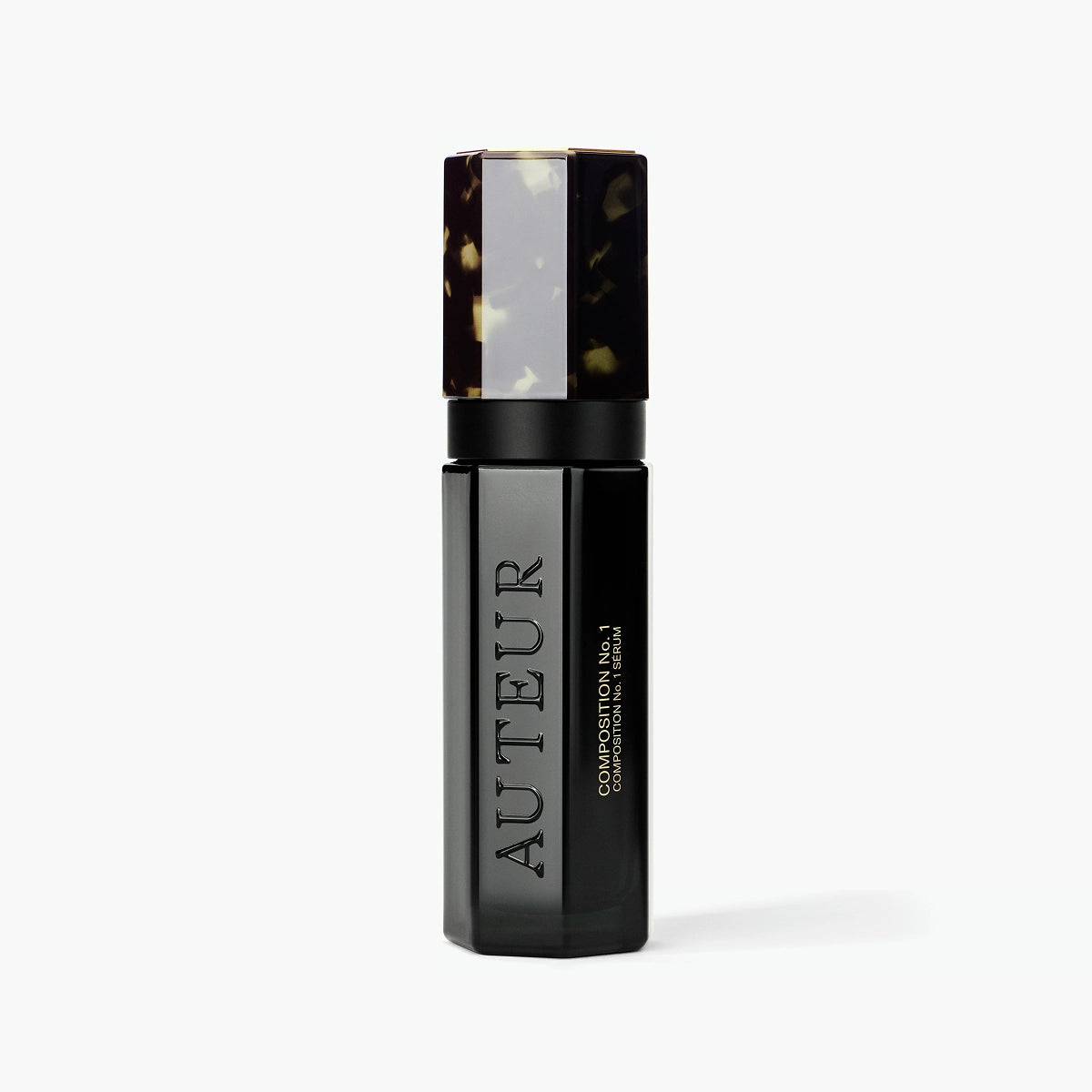
AUTEUR Definitive Lash Serum
$122 · 5ml
A peptide lash serum formulated without prostaglandin analogues of any kind and without hormones, built on biotinoyl tripeptide-1 and myristoyl pentapeptide-17 with panthenol and conditioning agents. Applied once nightly along the upper lash line. Consistent with the published lash cycle, change is typically noticed at weeks 6 to 8 and the full result at weeks 12 to 16.
Explore the FormulationWhichever class you choose, apply to a clean, dry upper lid only, keep the product out of the eye, and photograph the lash line and eyelid at week 0 so that any change, in lashes or sulcus, is seen rather than guessed.
Frequently Asked Questions
What are the side effects of prostaglandin lash serums?
In the 278-subject bimatoprost lash trial: eye itching, conjunctival redness and eyelid darkening, each in about 3 to 4% of subjects over four months. With longer ophthalmic use, sulcus deepening and periorbital fat loss are documented; iris darkening is likely permanent.
Is isopropyl cloprostenate the same as bimatoprost?
It is a prostaglandin analogue of the same class, sold in cosmetic lash serums without prescription. A 2022 study reported periorbital hollowing and darkened, thinned eyelid skin after ten months on an isopropyl cloprostenate serum, reversing six months after stopping.
Are the side effects of lash serums reversible?
Mostly, not entirely. Eyelid darkening reverses in most patients within 3 to 12 months of stopping; periorbital fat loss was partially reversible in the published case series; iris pigmentation change is likely to be permanent.
Do peptide lash serums have side effects?
The one published 12-week trial of a peptide serum in 30 women reported no adverse effects. Peptide serums do not act on the prostaglandin receptor, so pigmentation and periorbital fat loss are not expected. The evidence base is small.
References
1. Law, S.K. (2010). Bimatoprost in the treatment of eyelash hypotrichosis. Clinical Ophthalmology, 4, 349-358.
2. Smith, S., Fagien, S., Whitcup, S.M., et al. (2012). Eyelash growth in subjects treated with bimatoprost: a multicenter, randomized, double-masked, vehicle-controlled, parallel-group study. Journal of the American Academy of Dermatology, 66(5), 801-806.
3. U.S. Food and Drug Administration (2008). Bimatoprost ophthalmic solution 0.03% for hypotrichosis of the eyelashes: prescribing information, NDA 022369. FDA Drugs@FDA, sections 5.2, 5.3 and 6.
4. Filippopoulos, T., Paula, J.S., Torun, N., Hatton, M.P., et al. (2008). Periorbital changes associated with topical bimatoprost. Ophthalmic Plastic and Reconstructive Surgery, 24(4), 302-307.
5. Kucukevcilioglu, M., Bayer, A., Uysal, Y., Altinsoy, H.I. (2014). Prostaglandin associated periorbitopathy in patients using bimatoprost, latanoprost and travoprost. Clinical and Experimental Ophthalmology, 42(2), 126-131.
6. Jamison, A., Okafor, L., Ullrich, K., Schiedler, V. (2022). Do prostaglandin analogue lash lengtheners cause eyelid fat and volume loss? Aesthetic Surgery Journal, 42(11), 1241-1249.
7. Fernandez-Gonzalez, P., Truchuelo-Díez, M.T., Gómez-Sánchez, M.J. (2024). Open clinical trial evaluating the efficacy of a novel eyelash growth enhancer with peptides and glycosaminoglycans. Journal of Cosmetic Dermatology, 23(6), 2170-2180.