




Exosomes are nanoscale vesicles—typically 30 to 150 nanometres in diameter—released by nearly all cell types, including skin cells and stem cells. They function as biological messengers, carrying proteins, lipids, growth factors, and microRNA between cells to regulate repair, inflammation, and collagen synthesis. In skincare, exosome technology has emerged as one of the most talked-about ingredient categories of 2026, with search interest increasing by 81 percent over the past three months alone.
The premise is compelling. If you can deliver targeted cellular instructions directly to ageing skin, you might bypass many of the limitations of traditional topical actives. But the clinical reality is more nuanced than the marketing suggests, and understanding where exosomes excel—and where they fall short—matters for anyone investing in evidence-based skincare.
How Exosomes Work at the Cellular Level
Every living cell produces exosomes as part of normal biological function. These vesicles bud off from a cell's membrane and travel through the extracellular environment to deliver their cargo—proteins, lipids, and genetic material—to neighbouring cells. The receiving cell then reads these molecular signals and adjusts its behaviour accordingly. In skin, this communication pathway governs wound healing, collagen remodelling, and inflammatory response.
When sourced from stem cells, exosomes carry a concentrated payload of growth factors and signalling molecules associated with tissue regeneration. Pre-clinical studies have demonstrated that stem-cell-derived exosomes can accelerate wound closure, reduce oxidative damage markers, and upregulate collagen Type I and Type III expression in fibroblast cultures.
The Penetration Challenge
Skin's outermost layer, the stratum corneum, exists specifically to prevent foreign particles from entering the body. This barrier is remarkably effective at blocking molecules larger than approximately 500 daltons. Exosomes, while nanoscale, are considerably larger than this threshold.
Clinical research consistently shows that exosomes are most effective when delivered through compromised skin barriers. Microneedling combined with exosome application has produced measurable reductions in fine lines, wrinkles, and hyperpigmentation in controlled studies. But a topical serum applied to intact skin faces fundamentally different penetration dynamics.
This distinction is critical. Many consumer exosome products are formulated for direct application without any barrier-disruption method, and the evidence supporting this delivery route remains thin.
Exosomes vs. Peptides: What the Evidence Says
Peptides—short chains of amino acids that serve as cellular signalling molecules—have been studied in topical skincare for over two decades. The clinical literature supporting their efficacy through intact skin is extensive. Signal peptides like palmitoyl pentapeptide-4 have demonstrated statistically significant reductions in wrinkle depth in double-blind, placebo-controlled trials. Copper peptides (GHK-Cu) have shown proven wound-healing and collagen-stimulating properties across multiple peer-reviewed studies.
The key advantage of peptides is their molecular size and design flexibility. Formulation scientists can engineer peptides with lipophilic tails (palmitoylation) that dramatically improve skin penetration without requiring barrier disruption. This is the same biotechnology behind AUTEUR's proprietary Gold Pro Collagen Peptide—a precision-engineered molecule designed to reach target cells through intact skin.
| Criterion | Exosomes | Peptides |
|---|---|---|
| Peer-reviewed topical evidence | Limited; primarily in vitro and pre-clinical | Extensive; multiple RCTs over 20+ years |
| Penetration through intact skin | Poor without barrier disruption | Engineered for transdermal delivery |
| FDA status for cosmetic use | No approvals | Established GRAS ingredient category |
| Mechanism | Cell-to-cell vesicular communication | Direct receptor binding and gene expression |
| Stability in formulation | Fragile; degrades rapidly | Stable with modern encapsulation |
What to Look for If You Consider Exosome Products
Not all exosome products are created equal. The source material matters enormously. Human stem-cell-derived exosomes carry the most relevant signalling molecules for skin rejuvenation, but they are expensive to produce and difficult to stabilise. Plant-derived exosomes—increasingly common in consumer products—offer gentle anti-inflammatory benefits but lack the regenerative potency of their human-derived counterparts.
Concentration is equally important. Many mass-market products include exosomes at concentrations well below any level shown to produce measurable effects in research settings. Without standardised potency testing, consumers have no reliable way to compare products.
Three Questions to Ask Before Purchasing
First, what is the source of the exosomes? Human mesenchymal stem cell (MSC) exosomes have the strongest pre-clinical evidence, while plant-derived variants have minimal data supporting anti-aging claims. Second, what is the delivery method? Products designed for use with microneedling or professional treatments have more supporting evidence than standalone topical serums. Third, is there published clinical data specific to the product or ingredient concentration? Proprietary claims without published evidence should be evaluated with appropriate scepticism.
Where Cellular Communication Science Is Heading
The underlying science of exosomes—harnessing cellular communication pathways to direct skin behaviour—represents a legitimate frontier in dermatological research. The technology is likely to mature significantly over the coming years, particularly in professional and clinical settings where controlled delivery methods can be employed.
For topical skincare applied at home, the most reliable approach to cellular communication remains precision-engineered peptides. These molecules have been designed specifically to penetrate intact skin, bind to target receptors, and trigger defined biological responses—collagen synthesis, elastin production, inflammatory modulation—with decades of clinical validation.
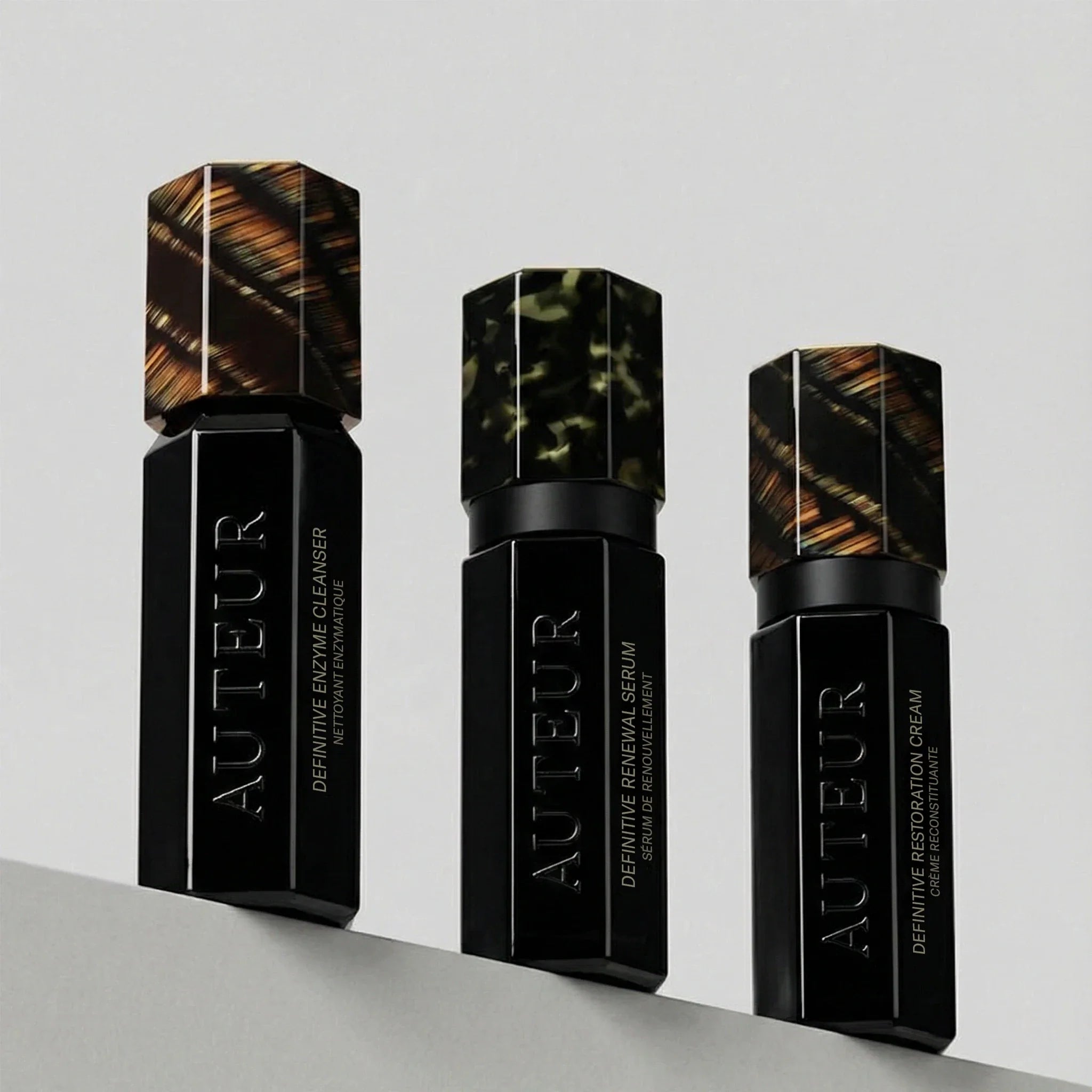
AUTEUR Definitive Renewal Serum
Formulated with Gold Pro Collagen Peptide and X50 Myocept—precision-engineered signal peptides clinically demonstrated to stimulate collagen synthesis through intact skin. The peer-reviewed approach to cellular communication.
Explore the FormulationThe conversation around exosomes reflects a broader truth about modern skincare: consumers are increasingly interested in how ingredients work at the cellular level, not just what they promise on the label. That shift toward biological literacy is welcome. The key is ensuring that enthusiasm for novel science does not outpace the evidence supporting it.
References
1. Kalluri, R. & LeBleu, V.S. (2020). The biology, function, and biomedical applications of exosomes. Science, 367(6478), eaau6977.
2. Kwon, H.H. et al. (2020). Stem cell-derived exosomes and their role in wound healing and skin rejuvenation. Journal of Cosmetic Dermatology, 19(8), 2059–2067.
3. Bos, J.D. & Meinardi, M.M. (2000). The 500 Dalton rule for the skin penetration of chemical compounds and drugs. Experimental Dermatology, 9(3), 165–169.
4. Robinson, L.R. et al. (2005). Topical palmitoyl pentapeptide provides improvement in photoaged human facial skin. International Journal of Cosmetic Science, 27(3), 155–160.
5. Pickart, L., Vasquez-Soltero, J.M. & Margolina, A. (2012). GHK peptide as a natural modulator of multiple cellular pathways in skin regeneration. BioMed Research International, 2012, 973426.