



The skincare industry's rediscovery of peptides over the past decade has been thorough, but not always precise. Most conversations about "peptide serums" treat this large and biochemically diverse category as if it were a single ingredient, applying the general promise of "collagen support" equally to molecules that operate through entirely different pathways. The distinction that most often collapses in popular coverage is the one that matters most to formulation outcomes: signal peptides and neuropeptides are not the same thing, do not target the same mechanisms, and produce different clinical effects.
This guide examines both classes with specificity, drawing on peer-reviewed literature to clarify what each category does, which ingredients define it, and how the two can be combined for a more complete approach to structural skin ageing.
Why the Distinction Matters
Visible facial ageing arises from two distinct processes running in parallel. The first is structural: a gradual loss of the extracellular matrix proteins, primarily type I and type III collagen, that give the dermis its volume and tensile strength. Collagen production declines at approximately 1% per year from the mid-twenties, and by the fifth decade the cumulative deficit is substantial enough to manifest as visible skin laxity, deepening folds, and reduced capacity for self-repair after environmental stress.
The second process is dynamic: the accumulation of expression lines caused by the repetitive contraction of facial muscles over years of movement. Smiling, squinting, and frowning inscribe themselves into the epidermis and upper dermis as grooves that deepen with each decade. This mechanism is entirely separate from collagen loss. You could have excellent dermal density and still carry pronounced expression lines, because those lines are not the product of lost scaffolding but of habitual muscle activity.
The practical implication is that the peptide most often featured on a product label indicates which of these mechanisms the formula targets. Palmitoyl pentapeptide-4 and its signal peptide relatives are not interchangeable with acetyl hexapeptide-8. Knowing this makes it possible to select products with considerably more precision.
Signal Peptides: Rebuilding from Below
Signal peptides are short amino-acid sequences that communicate directly with fibroblasts, the primary collagen-producing cells of the dermis. When these molecules penetrate the skin and reach the dermal layer, they are interpreted as fragments of degraded collagen, a signal that triggers a repair response. The fibroblast reads the presence of collagen breakdown products as evidence of structural damage, and responds by upregulating synthesis of new collagen, elastin, and the glycosaminoglycans that comprise the extracellular matrix.
This mechanism is sometimes described as "tricking" the fibroblast, but the term is reductive. The fibroblast is responding rationally to a legitimate molecular signal. The signal peptide is simply a synthetic analogue of the fragments that would be present after natural matrix turnover, delivered at a concentration and consistency that exceeds what the ageing dermis generates on its own.
Key Signal Peptides in Clinical Use
Palmitoyl pentapeptide-4, marketed as Matrixyl, is among the most studied signal peptides in cosmeceutical literature. It directly stimulates fibroblasts to produce type I and type III collagen, fibronectin, and hyaluronic acid. Published double-blind trials have demonstrated measurable reductions in wrinkle depth after 12 weeks of twice-daily application. Its palmitoyl modification, a fatty-acid chain attached to the peptide, increases lipid solubility and supports penetration through the stratum corneum.
Palmitoyl tripeptide-5 extends the Matrixyl model by also inhibiting matrix metalloproteinases (MMPs), the enzymes responsible for collagen degradation. This dual action, stimulating synthesis while suppressing breakdown, makes palmitoyl tripeptide-5 particularly relevant in photo-aged skin where MMP activity is chronically elevated. Clinical evidence supports its capacity to reduce melanin production as a secondary effect, addressing pigmentation alongside structural concerns.
Copper peptide GHK-Cu represents a distinct but related category, functioning as a carrier peptide that shuttles copper ions into the dermis. Copper is a cofactor for lysyl oxidase, the enzyme responsible for cross-linking newly synthesised collagen fibres into stable, functional structures. Without adequate copper, even high collagen synthesis produces structurally inferior matrix. GHK-Cu also carries a well-documented anti-inflammatory profile, making it compatible with sensitised or post-procedure skin.
Neuropeptides: Addressing the Surface in Motion
Neuropeptides operate at the neuromuscular junction, the site where a motor neuron communicates with a muscle fibre to produce contraction. Specifically, they modulate the SNARE protein complex that governs the release of acetylcholine, the neurotransmitter that triggers muscle contraction. By partially inhibiting this release, neuropeptides reduce the frequency and intensity of the micromovements that inscribe expression lines into the upper dermis over time.
The comparison to botulinum toxin is frequently made, and it has a biochemical basis. Botulinum toxin cleaves SNARE proteins entirely, producing a temporary paralysis. Neuropeptides interact with the same mechanism but with a far gentler, reversible effect. The result is not paralysis but a subtle reduction in neuromuscular signalling that, applied consistently over weeks, demonstrably smooths expression-related texture without altering the capacity for facial movement.
Key Neuropeptides in Clinical Use
Acetyl hexapeptide-8 (also known as acetyl hexapeptide-3 in earlier literature, and commercially as Argireline) is the most clinically documented neuropeptide in cosmeceutical use. A published randomised clinical study demonstrated a 59% reduction in wrinkle depth and a 41% reduction in wrinkle surface area over 30 days of topical application, compared to placebo. Its mechanism involves competitive inhibition of the SNARE complex, blocking the docking sequence that would otherwise allow acetylcholine-containing vesicles to fuse with the nerve cell membrane.
Leuphasyl works synergistically with acetyl hexapeptide-8 by targeting an upstream point in the same acetylcholine release pathway. Its mode of action mimics the inhibitory neurotransmitter enkephalin, reducing neuronal excitability. In combination with acetyl hexapeptide-8, the two neuropeptides produce a measurably greater reduction in expression-line depth than either achieves in isolation, supporting the rationale for multi-neuropeptide formulations.
Pentapeptide-18 (Leuphasyl) and acetyl octapeptide-3 (SNAP-8) extend the neuropeptide category with additional SNARE-targeting sequences, each entering the mechanism at a slightly different molecular point. SNAP-8 in particular has been positioned in clinical literature as an extended-sequence version of Argireline, with a longer amino-acid chain designed to deepen the inhibitory effect.
Stimulate fibroblast collagen and elastin synthesis; some inhibit MMP degradation
Modulate SNARE complex at neuromuscular junction; reduce muscle contraction frequency
Dermis: extracellular matrix, fibroblasts, collagen cross-linking
Neuromuscular junction: acetylcholine vesicle release
Improved firmness, reduced laxity, increased skin density over time
Reduced depth of expression lines: forehead, periorbital, perioral
Palmitoyl pentapeptide-4, palmitoyl tripeptide-5, GHK-Cu, palmitoyl tripeptide-38
Acetyl hexapeptide-8, Leuphasyl, SNAP-8, acetyl octapeptide-3
8 to 12 weeks for visible collagen-related improvement; continued use builds effect
4 to 8 weeks for measurable reduction in expression-line depth
Clinical Evidence Compared
The most rigorous head-to-head data on these two peptide classes comes from a double-blind, randomised controlled trial published in the Annals of Dermatology (2023), which compared acetyl hexapeptide-3 cream and palmitoyl pentapeptide-4 cream on periorbital expression lines over 12 weeks. Both groups showed statistically significant improvement in wrinkle depth scores compared to baseline, but by distinct trajectories: the neuropeptide group showed earlier visible smoothing, while the signal peptide group demonstrated greater dermal density improvement at the 12-week endpoint, as measured by ultrasound imaging.
A separate investigation published in the Journal of Cosmetic Dermatology (2023) examined a multi-peptide eye serum containing both signal and neuropeptide classes. Subjects demonstrated improvements across wrinkle depth, skin elasticity, and periorbital volume that exceeded those reported in single-class studies, supporting the hypothesis that the two mechanisms are additive rather than redundant when combined in a single formulation.
Comparative Efficacy at 12 Weeks — Wrinkle Improvement Metrics
Sources: PMC10005804; Li et al., J Cosmetic Dermatology, 2023; Anti-aging peptides, ScienceDirect, 2023.
The multi-peptide data points to a consistent pattern across the literature: combining signal peptides and neuropeptides in a single formulation consistently outperforms either class alone. The synergy is mechanistic rather than incidental. Signal peptides build and sustain the structural foundation; neuropeptides reduce the mechanical forces acting on that foundation. Neither addresses both problems adequately on its own.
Formulation Strategy: Using Both
For most individuals using a peptide serum as a standalone product, the question is whether the formula contains both signal and neuropeptide classes at clinically relevant concentrations. Proprietary blends frequently list peptide names without disclosing concentrations, which makes direct comparison difficult. The most useful proxy is specificity: a formula that names four or more distinct peptides with different amino-acid sequences is more likely to target multiple mechanisms than one listing a single "peptide complex."
For those layering products, the two peptide classes are fully compatible and do not compete biochemically. A formulation strategy might separate them: a neuropeptide-forward formula applied to areas of expression-line concentration (forehead, periorbital, perioral) and a signal peptide-rich treatment applied more broadly to support overall dermal density. Both products should be applied to clean skin before heavier moisturisers, which would otherwise reduce penetration of the hydrophilic peptide molecules.
Compatibility with retinol is a common question. There is no clinical evidence of antagonism between peptides and retinol, and several published formulations include both in the same vehicle. The practical caveat is stability: retinol and some peptides are individually prone to oxidation and pH sensitivity. Products containing both have been formulated to address this, but combining a retinol product with a separate peptide serum is a more controlled approach if skin tolerability is a concern.
Delivery and Stability Considerations
Peptides present a delivery challenge that limits the effectiveness of many commercially available formulations. Their molecular structure, short amino-acid chains with a net charge and moderate molecular weight, means they are absorbed less readily by the stratum corneum than small lipid-soluble molecules. Unmodified peptides tend to be metabolised at the skin surface or penetrate too superficially to reach the fibroblasts where signal peptides need to act.
The palmitoyl modification applied to many signal peptides is specifically designed to address this. The fatty-acid chain increases lipophilicity, allowing the peptide to associate with the lipid bilayers of the stratum corneum and transit into the viable epidermis. For neuropeptides, which need only reach the dermal-epidermal junction and shallow dermis rather than deep fibroblast populations, penetration requirements are somewhat less stringent, though formulation vehicle design still affects outcomes.
Encapsulation technologies represent the most significant recent advance in peptide delivery. A published clinical study applied palmitoyl tripeptide-5 and acetyl hexapeptide-8 loaded onto nanoliposomes and demonstrated a 25% greater reduction in wrinkle volume and a 36.6% greater improvement in skin elasticity compared to the same peptides in a standard emulsion vehicle, over four weeks of application. The encapsulated format protects the peptide from enzymatic degradation on the skin surface and extends the release profile into the dermis.
Stability in the finished formula is the second constraint. Peptides are vulnerable to heat, oxidation, and extreme pH. Formulations at pH 5 to 7 preserve peptide integrity most reliably. Products packaged in airless pump dispensers with opaque containers reduce oxidative degradation significantly compared to open-jar formats. When evaluating a peptide product, packaging design is not an aesthetic consideration; it is a functional one.
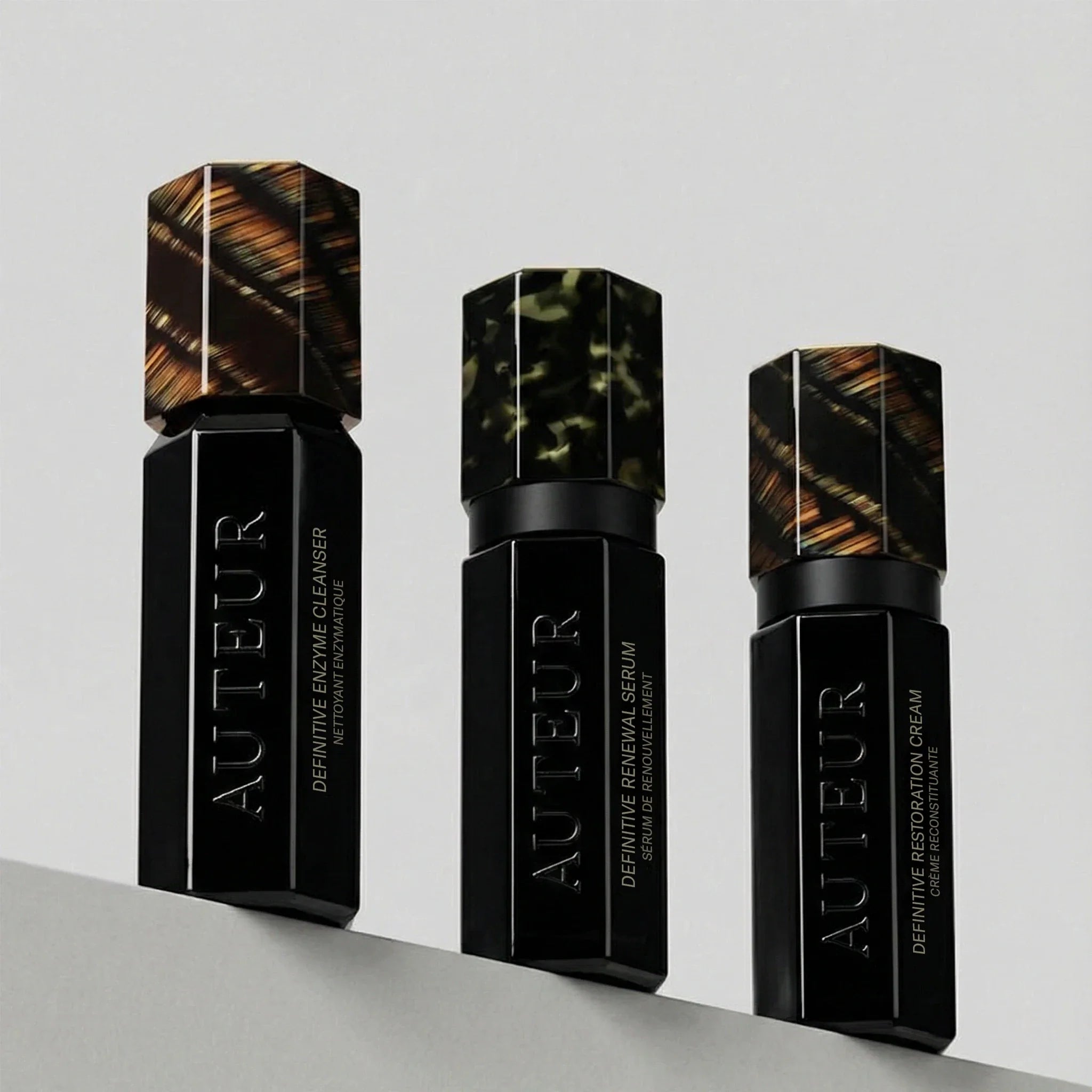
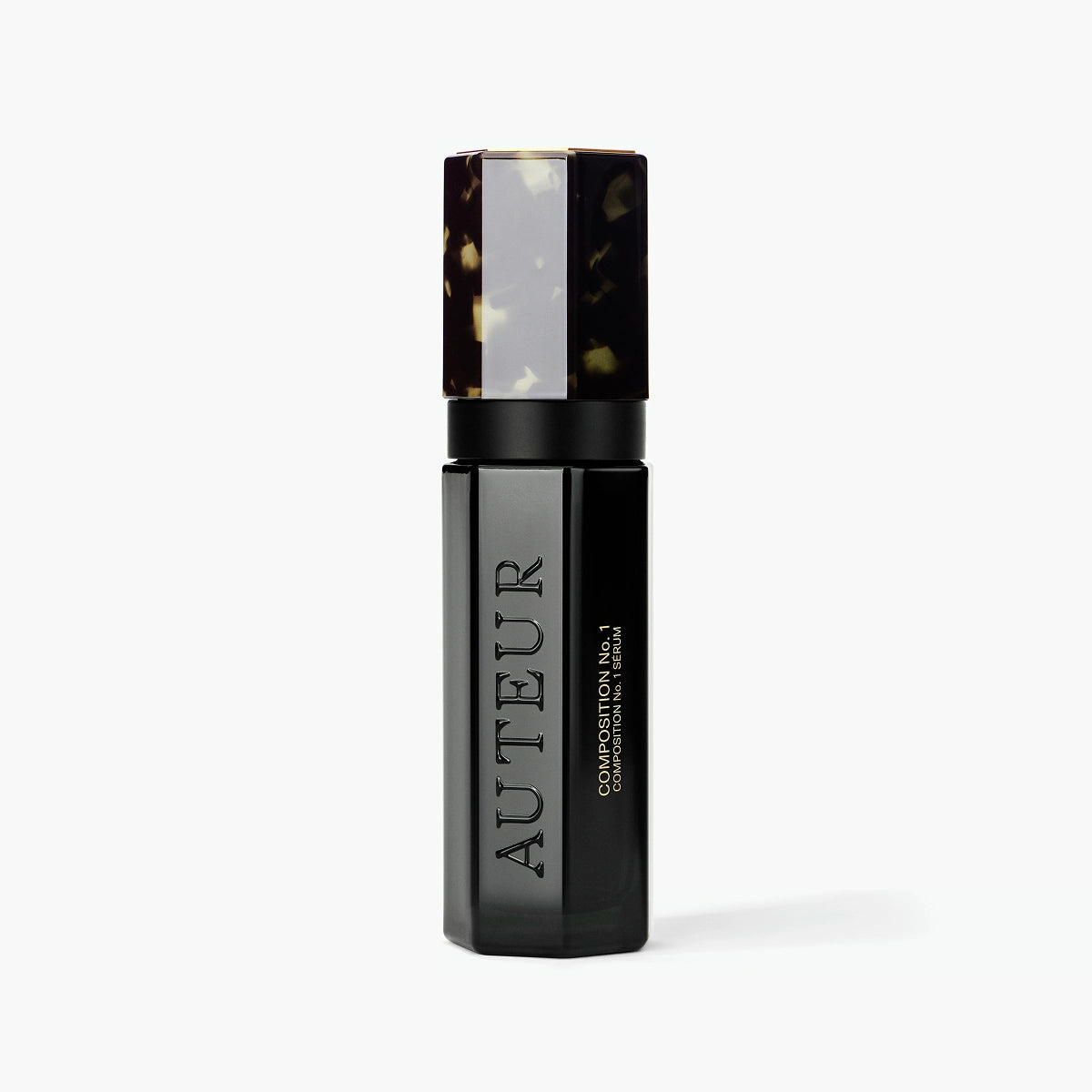
AUTEUR Definitive Renewal Serum
Formulated with a dual signal and neuropeptide complex, the Definitive Renewal Serum combines palmitoyl tripeptide-5 with acetyl hexapeptide-8 and GHK-Cu in a stabilised, airless delivery system. The formulation targets both dermal collagen synthesis and expression-line depth within a single, twice-daily application.
Explore the FormulationReferences
1. Varani, J., Dame, M.K., Rittie, L., et al. (2006). Decreased collagen production in chronologically aged skin. American Journal of Pathology, 168(6), 1861-1868.
2. Kang, S., Park, M.Y., et al. (2023). Double-blind, randomised trial on the effectiveness of acetylhexapeptide-3 cream and palmitoyl pentapeptide-4 cream for crow's feet. Annals of Dermatology, PMC10005804.
3. Li, Q., et al. (2023). Clinical evidence of the efficacy and safety of a new multi-peptide anti-ageing topical eye serum. Journal of Cosmetic Dermatology. doi:10.1111/jocd.15849.
4. Gorouhi, F., Maibach, H.I. (2009). Role of topical peptides in preventing or treating aged skin. International Journal of Cosmetic Science, 31(5), 327-345.
5. Errante, F., et al. (2023). Insights into bioactive peptides in cosmetics. Cosmetics, 10(4), 111. doi:10.3390/cosmetics10040111.
6. Pai, V.V., Bhandari, P., Shukla, P. (2017). Topical peptides as cosmeceuticals. Indian Journal of Dermatology, Venereology and Leprology, 83(1), 9-18.