
For thirty years, retinol has been the molecule that anti-aging routines were built around. It has the deepest clinical evidence base of any over-the-counter active, with measurable effects on collagen synthesis, hyperpigmentation, and the visible architecture of fine lines. None of that is in dispute. What is in dispute is whether the way most people now use it is actually producing the result the science says it can.
The argument running through dermatology in the last few years is not really an argument about retinol. It is an argument about dosing, frequency, and the state of the skin barrier when the active arrives. Read that carefully, because it changes which side of the debate you actually need to take.
The case against retinol
Most people use retinol like a punishment. Too high a strength, too often, on a barrier that never gets the chance to recover. The result is redness, flaking, and a barrier in permanent retreat, which is the opposite of younger-looking skin. The skeptics are right about one thing: aggressive retinol on a compromised barrier ages it faster, not slower.
The mechanism is well understood. Retinoids accelerate keratinocyte turnover and stimulate collagen production, but the same pathway also triggers an inflammatory response at the surface of the skin. Inflammation, sustained over months and years, breaks down the very collagen that retinol is supposed to be building.1 The clinical literature on chronic low-grade inflammation, often referred to as inflammaging, points to it as one of the primary drivers of accelerated visible aging.2 The reader who is using 1.0% retinol every night to chase a faster outcome is, in many cases, running the inflammaging engine themselves.
The visible signs that this is happening are unambiguous. Persistent redness across the cheeks and the central face. A barrier that feels tight after cleansing and stays tight. Flaking that does not resolve after two weeks of acclimation. A response to any new product that is sharper and more reactive than it used to be. None of these are normal adjustment. All of them are the barrier telling you to stop.
But: the science is on retinol's side
It is also true that retinol works. Across the clinical literature, retinoids remain the most reliably effective topical compound for reducing the visible signs of photoaging.3 The skeptics who dismiss it entirely are arguing against a tool, when what they should be arguing against is the way the tool is held.
The studies that established retinol's reputation used relatively low concentrations applied gradually, with built-in acclimation periods and parallel barrier support. They did not use 1.0% nightly with no buffer. When the protocol matches the formulation, the result holds. When the protocol abandons the formulation logic, the result inverts.
This is why the debate keeps recycling: each side is correct about a different thing. Retinol is effective. The way it is most commonly used is destructive. Both statements can stand at the same time. The formulation question, then, is whether it is possible to keep the molecule and remove the destructive pattern.
The AUTEUR approach: intelligent retinol
The AUTEUR position on retinol is not that the molecule needs to be replaced. It is that the formulation around it needs to be rebuilt. A formulation that solves the controversy has to do three things simultaneously: deliver the active gradually rather than all at once, partner it with a compound that calms the inflammatory response, and reinforce the barrier at the same time the renewal is happening.
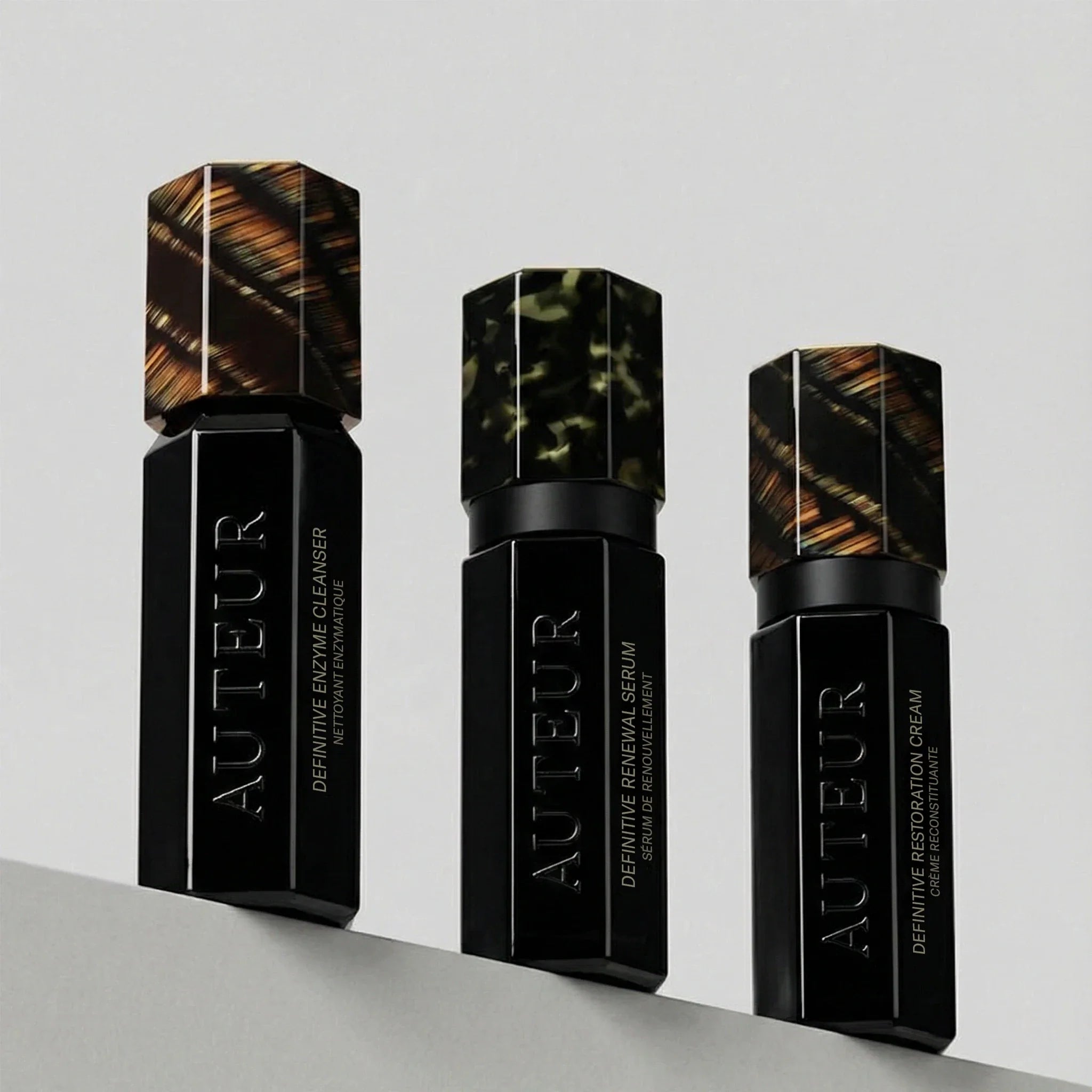
The Definitive Retinol Serum is built around this logic. Time-released encapsulated retinol releases the active gradually, so skin gets the renewal without the war. Bakuchiol extends the effect and calms the response. Not retinol turned up louder. Retinol made intelligent.

Definitive Retinol Serum
Time-released encapsulated retinol paired with bakuchiol, niacinamide, and ceramide support. Engineered to deliver the renewal effect of a retinoid without the inflammation spike that compromises the barrier in parallel.
Explore the FormulationThe three pillars of an intelligent formulation
The shift from aggressive retinol to intelligent retinol comes down to three formulation choices. Each one solves a different part of the controversy. Together they neutralise the irritation pattern that has produced the skeptical case in the first place.
Encapsulated retinol
Conventional retinol delivers a concentration spike at the moment of application, which is the source of the irritation that follows. Encapsulation places the active inside a microscopic delivery vehicle that releases it over several hours. The cumulative dose is the same, but the skin is never exposed to the spike. Comparative formulation research consistently shows reduced irritation with encapsulated systems at equivalent doses to free retinol.4
Bakuchiol
Bakuchiol is a meroterpene phenol derived from the Babchi plant that produces retinol-like effects through a different molecular mechanism. Comparative trials of bakuchiol against retinol have shown comparable improvements in wrinkles and hyperpigmentation, with significantly fewer side effects.5 In a partnered formulation, bakuchiol extends the renewal effect and dampens the inflammatory response that retinol initiates. It is not a replacement for retinol. It is a corrector for retinol's behaviour.
Niacinamide and ceramides
The barrier work has to happen in parallel, not afterwards. Niacinamide upregulates ceramide biosynthesis and reduces transepidermal water loss, while topical ceramides directly replenish the lipid matrix that holds the barrier together. Without this layer of the formulation, the renewal active is acting on a structure that is incrementally being weakened. With it, the barrier rebuilds at the same speed the surface renews.
When peptides become the alternative
For some readers, the right answer is not a smarter retinol. It is a different approach entirely. Skin that has been chronically over-treated, skin that reacts to even encapsulated retinol after a fair acclimation period, or skin that is simply not ready to manage a retinoid routine has another path.
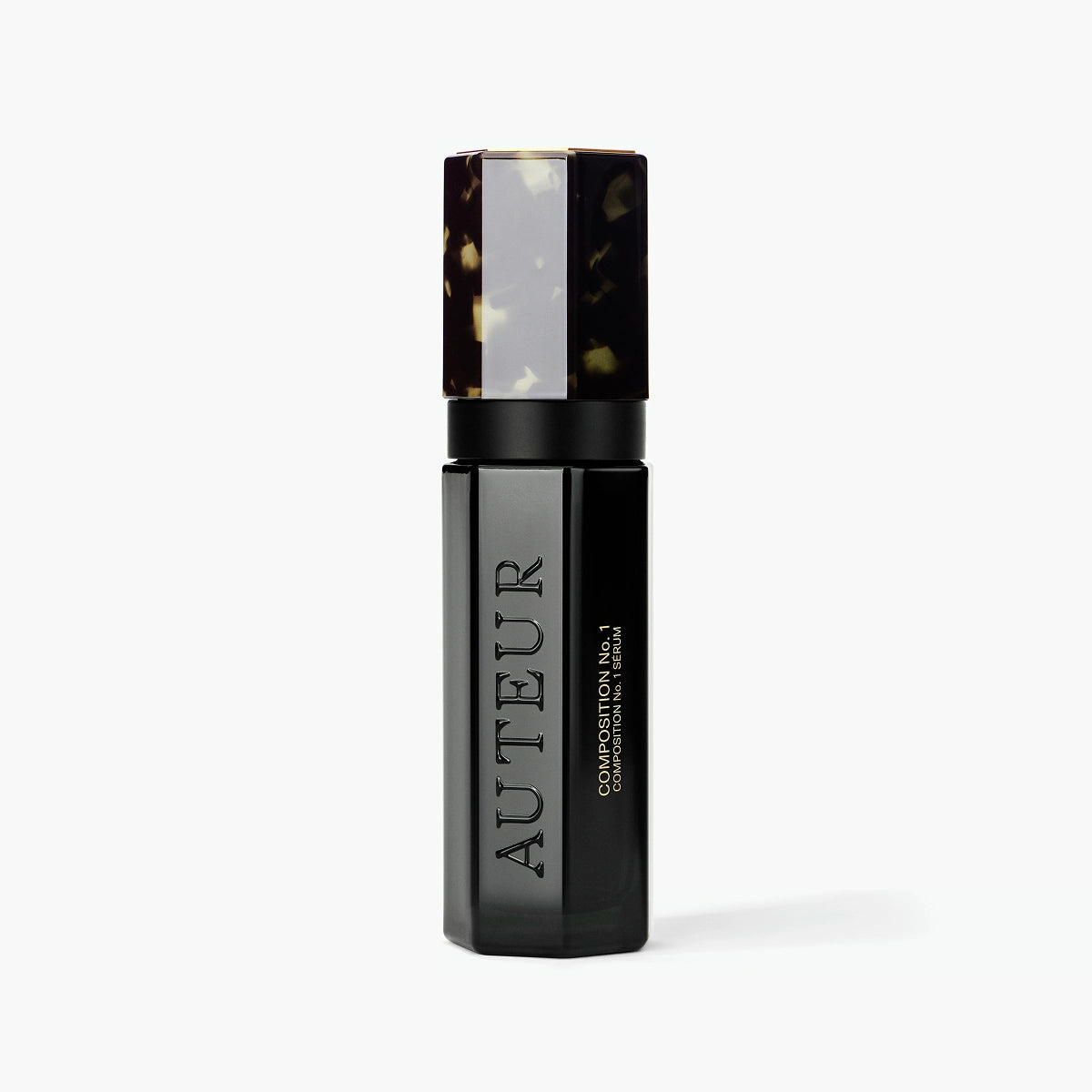
Multi-peptide serums produce anti-aging effects through a different mechanism than retinoids. Signal peptides instruct fibroblasts to produce collagen. Neuropeptides reduce the visible depth of expression lines by modulating muscle contraction at the surface. Growth factor compounds support cellular renewal without triggering the inflammatory pathway that retinol activates.6 Composition No. 1 is built on this architecture. It is not a competitor to retinol. It is the alternative path for the reader for whom retinol is the wrong starting point.

The Verdict.
Can you keep dialing your retinol stronger? Sure. Will a barrier in constant retreat ever look younger? The science says no.
What this means in practice
The retinol controversy resolves once you separate the molecule from the protocol. The molecule is one of the most validated tools in topical dermatology. The protocol most people inherit from social media is dosed for a body that does not have a skin barrier. Holding both of these in mind at the same time is the start of an actually intelligent routine.
For readers committed to retinol, the formulation matters more than the strength. An encapsulated formulation paired with bakuchiol and barrier support, used at the lowest effective frequency, will produce a better long-term outcome than a higher-strength conventional retinol used aggressively. For readers whose skin has signalled that retinol is not the right tool, a multi-peptide architecture is the most established alternative. Either path resolves the controversy. The path that does not work is the one that keeps turning the dial.
Frequently asked questions
Retinol is not inherently bad for skin. It remains one of the most studied molecules in dermatology and produces measurable changes in collagen synthesis, pigmentation, and surface texture. What is harmful is the way most people use it: too high a strength, too frequently, on a barrier that has not been given time to adapt. Aggressive retinol on a compromised barrier accelerates visible aging through chronic inflammation rather than reversing it.
Encapsulated retinol is housed inside a microscopic delivery vehicle, typically a lipid or polymer shell, which releases the active gradually over hours rather than all at once. The clinical result is comparable retinoid activity with significantly less peak irritation, because the skin is never exposed to a sudden concentration spike. Encapsulation is the single most important advance in retinol formulation in the last decade.
Bakuchiol does not replace retinol but works alongside it. Comparative studies show bakuchiol produces measurable improvements in wrinkles and hyperpigmentation with a significantly lower irritation profile, which makes it useful as a partner to encapsulated retinol rather than a standalone substitute. The strongest formulations combine the two to extend the renewal effect while calming the inflammatory response.
Start with a low-strength encapsulated formulation no more than two nights a week, and only after the barrier has been established as healthy and hydrated. Layer with ceramides and niacinamide to support the barrier in parallel. Increase frequency only when the skin shows no signs of redness, tightness, or flaking. The minimum effective dose, applied consistently, outperforms aggressive use almost universally.
Multi-peptide serums offer an alternative anti-aging pathway that does not rely on retinoid activity. Signal peptides, neuropeptides, and growth factor compounds support collagen synthesis and reduce the visible depth of expression lines through a different mechanism than retinol. For readers whose skin does not tolerate retinoids, or who want results without managing a retinol routine, this is the most established alternative.
References
1. Mukherjee, S., Date, A., Patravale, V., Korting, H. C., Roeder, A., & Weindl, G. (2006). Retinoids in the treatment of skin aging: an overview of clinical efficacy and safety. Clinical Interventions in Aging, 1(4), 327-348.
2. Franceschi, C., Garagnani, P., Parini, P., Giuliani, C., & Santoro, A. (2018). Inflammaging: a new immune-metabolic viewpoint for age-related diseases. Nature Reviews Endocrinology, 14(10), 576-590.
3. Kang, S., Fisher, G. J., & Voorhees, J. J. (2001). Photoaging and topical tretinoin: therapy, pathogenesis, and prevention. Archives of Dermatology, 133(10), 1280-1284.
4. Castro, G. A., & Ferreira, L. A. M. (2008). Novel vesicular and particulate drug delivery systems for topical anti-acne therapy. Expert Opinion on Drug Delivery, 5(6), 665-679.
5. Dhaliwal, S., Rybak, I., Ellis, S. R., Notay, M., Trivedi, M., Burney, W., Vaughn, A. R., Nguyen, M., Reiter, P., Bosanac, S., Yan, H., Foolad, N., & Sivamani, R. K. (2019). Prospective, randomized, double-blind assessment of topical bakuchiol and retinol for facial photoageing. British Journal of Dermatology, 180(2), 289-296.
6. Pai, V. V., Bhandari, P., & Shukla, P. (2017). Topical peptides as cosmeceuticals. Indian Journal of Dermatology, Venereology and Leprology, 83(1), 9-18.