
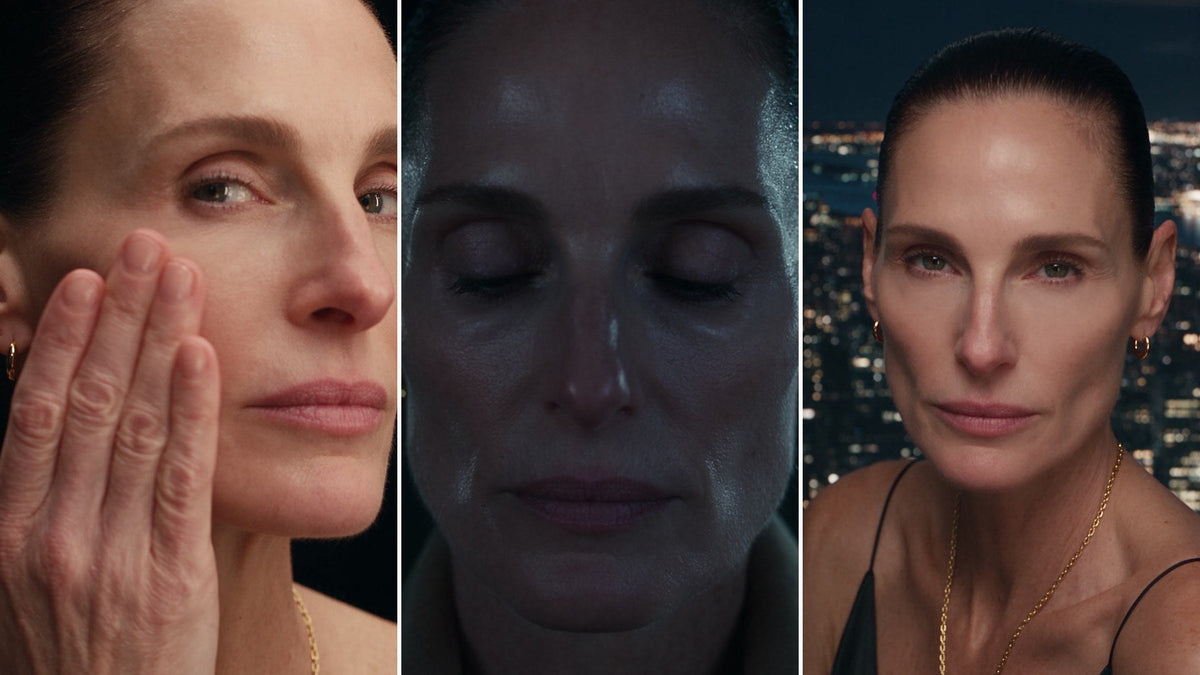
Do under-eye masks work? The answer depends on what you expect them to do. A hydrogel eye patch is an occlusive dressing in cosmetic form, and occlusion has been studied for decades because it changes two things: how much water the stratum corneum holds, and how readily molecules pass through it.
This article sets out the published occlusion data, explains why a hydrogel behaves differently from a cream, and draws the line between what fifteen minutes can deliver and what it cannot. A patch does one thing well, that thing is measurable, and the rest depends on what is dissolved in the gel.
An under-eye mask hydrates for fifteen minutes. Without a cream over it, that water leaves again.
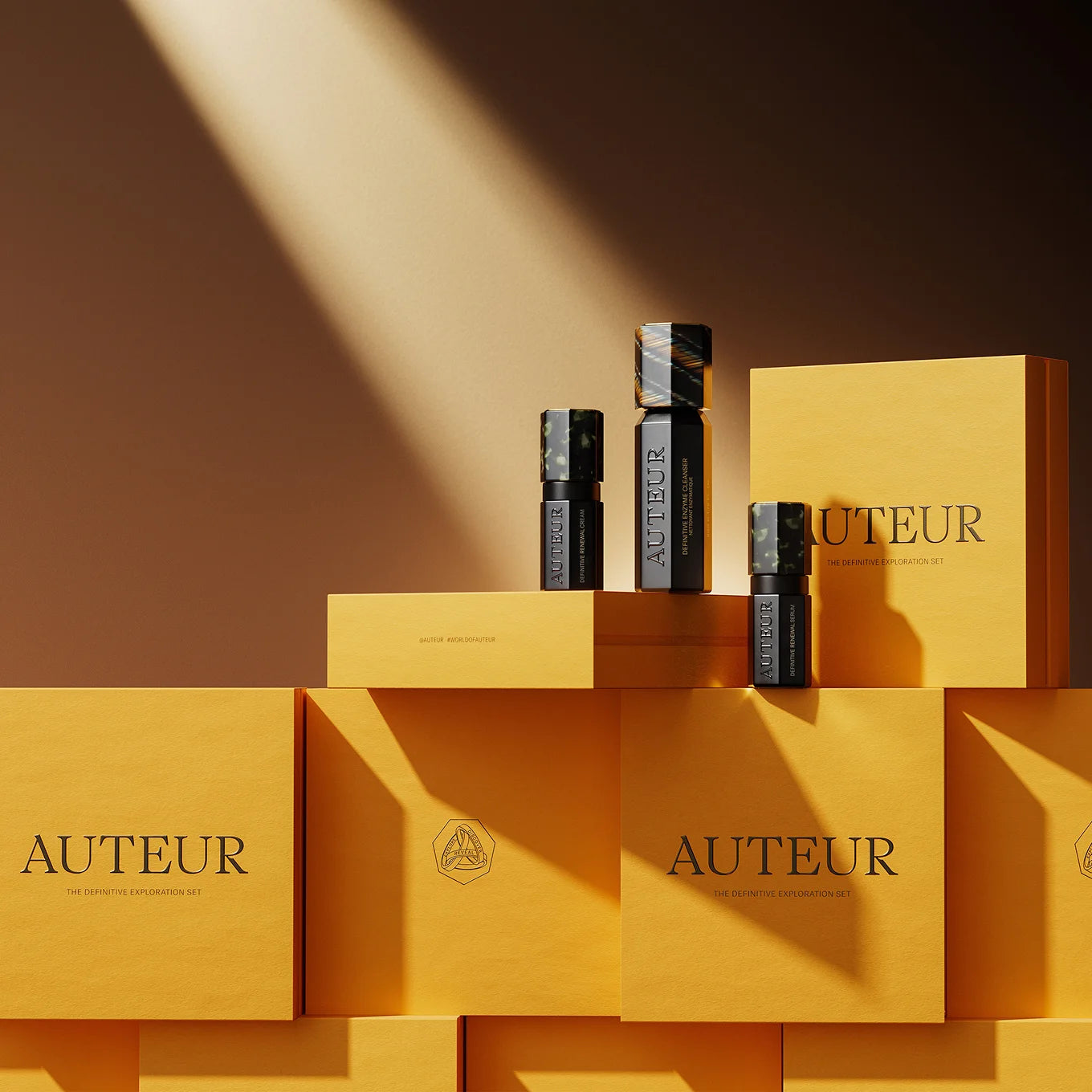
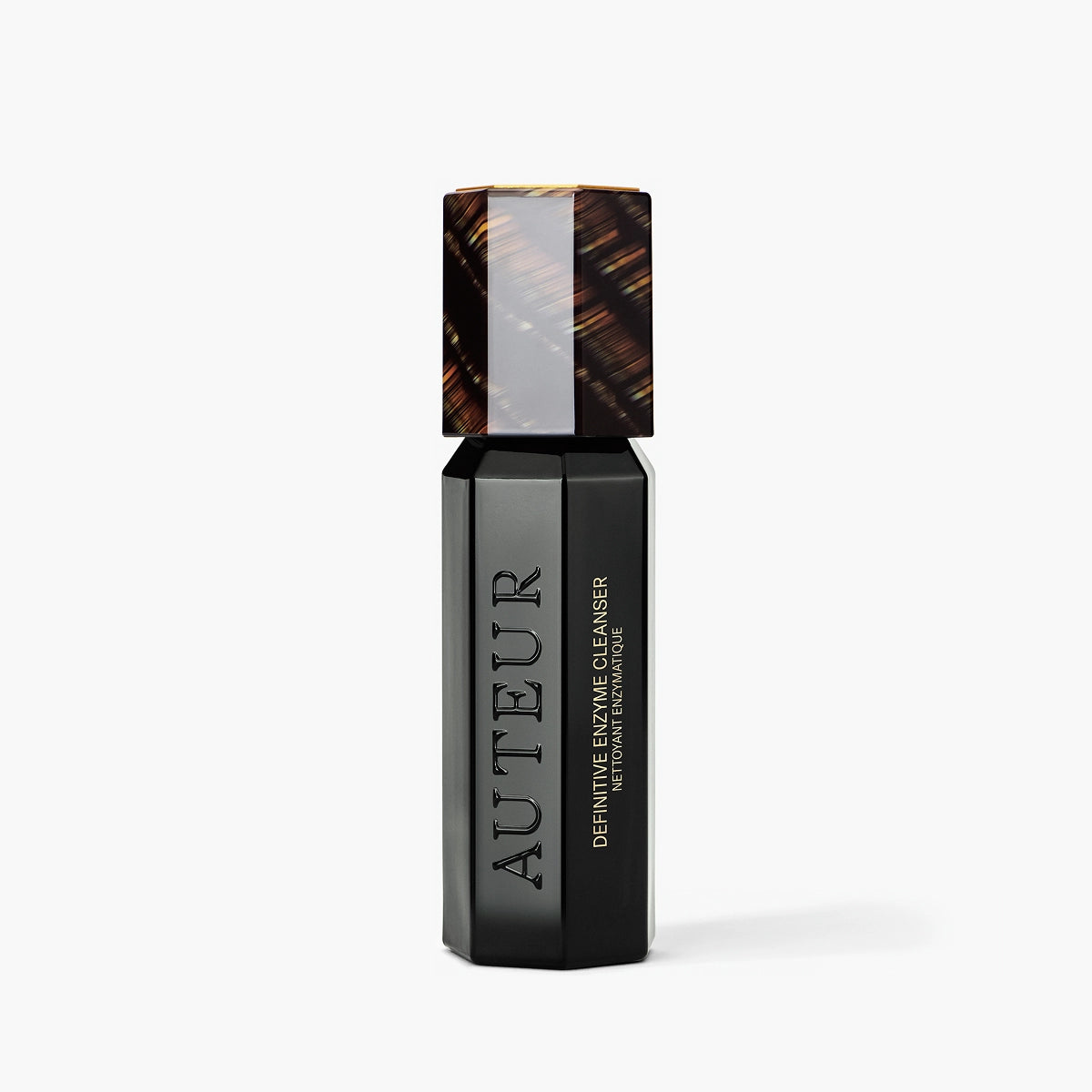
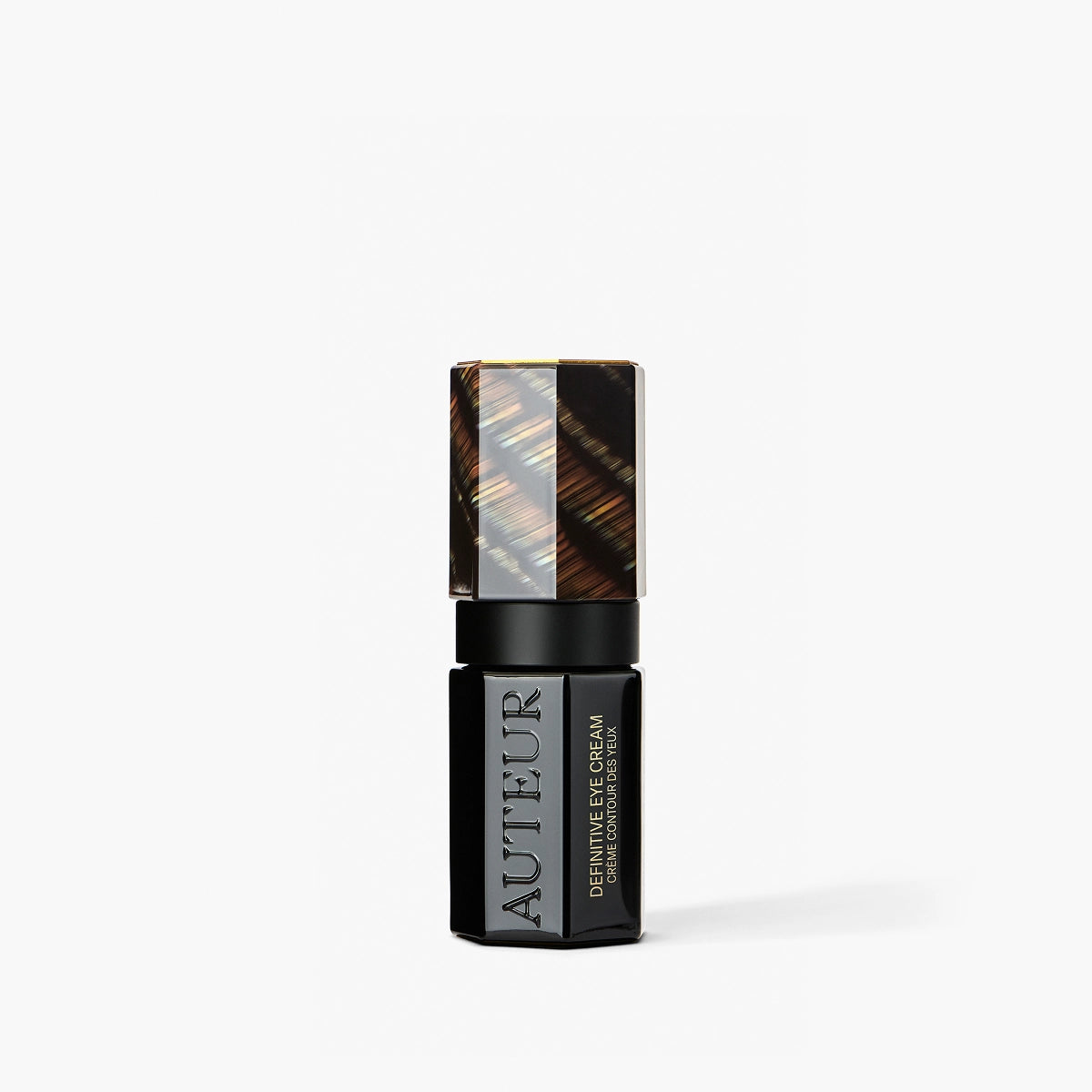
Definitive Eye Cream seals it in. Ceramides and emollients for the thinnest skin on the face, with signalling peptides.
What occlusion does to the stratum corneum
The stratum corneum of healthy facial skin holds between 10 and 20% water by weight at rest. The air above it is almost always drier than the tissue beneath it, so water moves outward constantly. Place an impermeable layer over the surface and that gradient collapses. Water arriving from the viable epidermis has nowhere to go, and the corneocytes swell. Zhai and Maibach summarised the effects of occlusion as a rise in stratum corneum hydration, a rise in surface temperature, and a change in how applied chemicals partition between vehicle and skin (Zhai and Maibach, 2001). A later review from the same laboratory put a figure on it: occlusion can increase stratum corneum hydration up to 50% (Hafeez and Maibach, 2013).
Those figures are the basis of the under-eye patch. It does not add water in any meaningful amount. It stops water leaving. The smoother surface after a quarter of an hour is the optical consequence of corneocytes swollen with the skin's own water.
Why a hydrogel behaves as a reservoir
Therefore the question becomes why a hydrogel rather than a thick cream, since both occlude. The difference is the matrix. A hydrogel is a crosslinked polymer network, typically polyvinylpyrrolidone, polyethylene glycol, agar or a seaweed polysaccharide, swollen with water to 80 to 95% of its mass. The chains hold that water so the patch keeps its shape, but the water inside is mobile and moves toward drier skin along the gradient, carrying whatever is dissolved in it. The patch is a reservoir with a fixed dose, contact area and dwell time.
A cream has none of those constraints: it spreads unevenly and the dose depends on the hand. A hydrogel delivers the same quantity to the same square centimetre every time, which is why wound care adopted the format before cosmetics did. A 2026 pilot study tested a polyvinylpyrrolidone and agar hydrogel mask on fifteen volunteers with sensitive skin over six weeks and reported progressive improvement in hydration and firmness with no adverse effect on barrier parameters, sebum, colour or pH (Rokita et al., 2026). The study was small and open label, but its direction matches the occlusion literature.
But a reservoir only delivers what it carries. Whether an under-eye mask does anything beyond hydration is entirely a question of the actives dissolved in it and whether they can cross the stratum corneum once hydration has risen.

Occlusion and penetration: the data
The clearest human data comes from a mass balance study in the Journal of Investigative Dermatology. Bucks and colleagues applied four radiolabelled steroids to the forearm of healthy men, once under an occlusive cover and once under a breathable one, and recovered the dose over seven days to calculate the fraction absorbed. Occlusion raised absorption of estradiol from 3.4% of the applied dose to 27%, testosterone from 18% to 46%, and progesterone from 13% to 33%. Hydrocortisone, the most water-soluble of the four, did not change: 4.4% protected and 4.0% occluded (Bucks et al., 1988).
Occlusion is not a trivial effect: for the lipophilic steroids it multiplied absorption between two and eight times. It is also not universal. The hydrophilic molecule did not benefit, and a review of seven in vivo studies concluded that occlusion enhances lipophilic compounds more than hydrophilic ones (Hafeez and Maibach, 2013). Whether an active gains from the patch depends on its chemistry.
Molecular size is the other gate. Bos and Meinardi observed that the common contact allergens and the effective topical drugs all fall below about 500 Daltons, and proposed that as the limit for passive penetration of intact stratum corneum (Bos and Meinardi, 2000). The short signalling peptides used in eye care, covered in the peptides article, sit at or below that line. A full-length collagen protein, at around 300,000 Daltons, does not, so collagen on a patch label describes a film-forming humectant, not a dermal supplement.
The periorbital skin is a different substrate
All of this lands on the thinnest skin on the body. A 2025 high-frequency ultrasound study measured 23 facial regions in 45 women aged 22 to 73 and reported a median of 573 micrometres at the upper eyelid and 807 at the lower eyelid, against about 1,300 at the cheek and 1,907 at the nasal tip (Korzekwa et al., 2025). The lower eyelid is roughly 60% of the thickness of the cheek beside it.
Thin skin has a shorter diffusion path, so hydration and any penetration happen faster there. It also has less dermis to hold water, fewer sebaceous glands to supply lipid, and a thinner stratum corneum to buffer irritants, which is why the periorbital area dehydrates first and reacts first. The eye cream versus serum article covers the anatomy. The point here is that the periorbital region is where occlusion shows the largest change in the shortest time, and where its limits show soonest, because there is little tissue to change.
What fifteen minutes can and cannot do
Fifteen minutes under a hydrogel raises stratum corneum water content substantially and reversibly. The surface reflects light more evenly, dehydration lines flatten, and the skin looks rested. If the gel carries glycerin or a hyaluronate, some of that hydration persists for a few hours because the humectant stays behind. This effect is real, repeatable and measurable with a corneometer the same day.
But hydration is epidermal. Puffiness, pigmented dark circles and the folds that remain at rest are dermal or vascular, and the stratum corneum does not reach them. A 2023 study of a multi-peptide eye serum in 32 women found that hydration, elasticity and the measured number, depth and volume of crow's feet wrinkles improved continuously over 28 days of twice-daily use (Li et al., 2023). The relevant word is continuously. Peptide signalling accumulates over weeks of repeated exposure, and a patch worn two or three times a week contributes in proportion to how often it is worn and what it carries.
Therefore the honest description of an under-eye mask is a short, high-dose occlusive treatment with an immediate hydration effect and, if it carries small actives with published signalling data, a cumulative contribution over weeks. It does not replace a daily eye cream, which supplies the lipid and the continuous low dose the patch does not. The two are used together.
Occlusion does one thing with certainty: it stops water leaving the stratum corneum, raising its water content from a resting 10 to 20% toward 50%. Everything else depends on what is dissolved in the gel and whether that molecule is small enough to benefit. Judge a patch by its matrix and its actives, not by the fifteen minutes.
What to look for in an under-eye mask
Four criteria follow. The matrix should be a true hydrogel that holds its water for the full wear time, not a soaked sheet that dries in minutes and reverses the gradient. The actives should be small enough to cross the stratum corneum: signalling and neuropeptides below the 500 Dalton line rather than full proteins, though a bioengineered collagen fragment still earns its place as a film-forming humectant. The formulation should carry no fragrance, since occlusion is the delivery system most likely to drive a sensitiser through the thinnest skin on the face. And the schedule should be stated: two to three times a week for 15 minutes, eye cream immediately after.
The Superlative Eye Mask, a hydrogel patch built on eleven peptides and a bioengineered type III-like collagen, arrives on 15 December at $135 for seven pairs; the Superlative collection page carries the line until then. The daily step it sits alongside is below.
AUTEUR Definitive Eye Cream
$420 · 15ml
A German-made periorbital cream for the thinnest skin on the face: emollient and ceramide fractions to hold hydration in a region with little sebum of its own, with signalling peptides at the molecular sizes the penetration literature supports. Applied morning and evening with the ring finger, pressed rather than rubbed, and immediately after an under-eye mask to seal the water the occlusion produced.
Explore the FormulationFrequently Asked Questions
Do under-eye masks actually do anything?
Yes, within limits. A hydrogel patch is an occlusive reservoir: it stops water leaving the stratum corneum and can raise its water content from a resting 10 to 20% to as much as 50%. That hydration effect is immediate and measurable. Structural change in the dermis is not something a single 15 minute application produces.
How long should you leave under-eye patches on?
Fifteen to twenty minutes. Stratum corneum water content rises quickly under occlusion and then plateaus. Beyond about 20 minutes the patch begins to dry and the gradient reverses, so longer wear adds little and risks maceration of the thinnest skin on the face.
Do eye patches help with dark circles?
Only for one cause. Circles from thin, dehydrated skin that lets the vascular bed show through improve when the stratum corneum is plumped. Circles from melanin or tear trough anatomy do not. The lower eyelid measures about 807 micrometres against about 1,300 on the cheek, so hydration shows there fastest.
Can peptides in an eye mask get through the skin?
Small ones can. The widely cited threshold for passive penetration is about 500 Daltons, and signalling peptides such as Acetyl Hexapeptide-8 and GHK-Cu sit at or below that line. Occlusion raises hydration and permeability for many molecules, which is why peptide delivery under a hydrogel is a reasonable design.
Should you use eye cream after an under-eye mask?
Yes. The patch leaves the stratum corneum at peak hydration with no lipid to hold it. An eye cream applied immediately afterwards seals that water in and supplies the emollient and ceramide fraction the hydrogel does not carry. Press it in rather than rubbing.
References
1. Zhai, H., Maibach, H.I. (2001). Effects of skin occlusion on percutaneous absorption: an overview. Skin Pharmacology and Applied Skin Physiology, 14(1), 1 to 10.
2. Hafeez, F., Maibach, H. (2013). Occlusion effect on in vivo percutaneous penetration of chemicals in man and monkey: partition coefficient effects. Skin Pharmacology and Physiology, 26(2), 85 to 91.
3. Bucks, D.A.W., McMaster, J.R., Maibach, H.I., Guy, R.H. (1988). Bioavailability of topically administered steroids: a mass balance technique. Journal of Investigative Dermatology, 91(1), 34 to 38.
4. Bos, J.D., Meinardi, M.M. (2000). The 500 Dalton rule for the skin penetration of chemical compounds and drugs. Experimental Dermatology, 9(3), 165 to 169.
5. Korzekwa, S., Matusz, K., Kukulski, M., Wawrzaszek, P., Górna, N., Rosiński, W., Włosiański, J., Przystańska, A. (2025). Quantitative analysis of the human face skin thickness: a high-frequency ultrasound study. Journal of Clinical Medicine, 14(23), 8401.
6. Rokita, B., Kozlowska, J., Adamus-Wlodarczyk, A., Olejnik, A.K., Czechowska-Biskup, R., Wach, R.A. (2026). Hydrogel facial mask for sensitive skin: a pilot study of long-term effects on hydration, barrier function and mechanical properties. International Journal of Cosmetic Science, 48(4), 864 to 883.
7. Li, F., Chen, H., Chen, D., Zhang, B., Shi, Q., He, X., Zhao, H., Wang, F. (2023). Clinical evidence of the efficacy and safety of a new multi-peptide anti-ageing topical eye serum. Journal of Cosmetic Dermatology, 22(12), 3340 to 3346.