


Peptide serums are everywhere in 2026. The category has exploded, with formulations ranging from single-peptide basics to complex multi-active systems. For skin over 40, this abundance creates a problem: most peptide serums are not formulated for what aging skin actually needs. They contain the right category of ingredient at the wrong concentration, in the wrong delivery system, without the supporting actives required to make peptides perform.
Choosing well requires knowing what to look for. Not brand names or packaging, but the specific formulation decisions that determine whether a peptide serum will produce measurable change in firmness, wrinkle depth, and skin density, or simply sit on the surface doing very little.
Why Peptides Matter More After 40
After 40, the skin's collagen production declines at an accelerating rate. Fibroblasts, the cells responsible for building collagen, become less active. The collagen that remains becomes fragmented and stiffened by enzymatic degradation and glycation. Research published in PLOS One confirmed this at the structural level: aged dermal collagen fibrils are measurably rougher, stiffer, and harder than young collagen, the result of elevated MMP-1 activity and accumulated advanced glycation end products (1).
Peptides address this directly. They are short chains of amino acids that function as biological signals, binding to fibroblast receptors and triggering the collagen synthesis pathways that have slowed with age. In essence, peptides tell your fibroblasts to start building again. But not all peptides deliver the same signal, and not all formulations get those signals where they need to go.
Single Peptide vs. Multi-Peptide: Why It Matters
Most affordable peptide serums contain one or two peptides. This is not inherently bad, but it is insufficient for skin over 40. The reason is that aging skin faces multiple simultaneous problems: reduced collagen synthesis, increased collagen degradation, loss of elasticity, diminished hydration volume, and impaired cellular energy production. A single peptide, no matter how effective, can only address one of these mechanisms.
A multi-peptide formulation targets several pathways at once. Signal peptides stimulate collagen production. Neuropeptides reduce the muscle contractions that deepen expression lines. Carrier peptides deliver essential minerals to the dermal layer. When these work in concert, the cumulative effect exceeds what any single peptide achieves alone.
The Peptides Worth Knowing
SYN-AKE (Neuropeptide)
SYN-AKE is a tripeptide that modulates the nicotinic acetylcholine receptor at the neuromuscular junction. In plain terms, it reduces the intensity of muscle contractions that create expression lines. A controlled 28-day clinical study on a 4% SYN-AKE formulation showed up to 52% reduction in wrinkle depth in the eye contour area, with improvements in skin smoothness confirmed by cutometry (2). It is one of the most clinically validated neuropeptides available.
Gold Pro-Collagen Peptide (Signal Peptide)
This peptide uses colloidal gold nanoparticles as a delivery vehicle to carry collagen-stimulating sequences past the stratum corneum and into the dermis. The gold carrier solves one of the oldest problems in peptide skincare: penetration. Without an effective delivery system, even the best peptides remain on the surface. Gold nanoparticles are small enough to reach the fibroblasts where collagen synthesis actually occurs.
SYN-HYCAN (Matrix Peptide)
SYN-HYCAN stimulates the production of hyaluronic acid and versican within the dermis. These are the glycosaminoglycans that hold water within the collagen matrix, giving skin its volume and bounce. As the dermis loses these molecules with age, skin deflates from within. SYN-HYCAN addresses the hydration architecture, not just surface moisture.
Supporting Actives That Make Peptides Work Harder
Peptides are the primary actors. But in a well-formulated serum, they do not work alone. The supporting cast determines whether they reach their potential.
Encapsulated Retinol
Retinol accelerates epidermal cell turnover, which improves the skin environment for peptide penetration. Encapsulation matters because conventional retinol degrades on contact with air and can cause significant irritation at effective concentrations. Encapsulated retinol releases gradually, maintaining efficacy over hours while reducing the inflammatory response that undermines the collagen-building process peptides are trying to initiate.
Niacinamide (Vitamin B3)
Niacinamide directly supports dermal density. A clinical trial on 44 women found that niacinamide combined with hyaluronic acid increased skin glycosaminoglycan content by 52% in two months, with measurable improvements in plumpness and fine lines (3). Separately, topical 5% niacinamide has been shown to stimulate collagen synthesis from human dermal fibroblasts while rebalancing the dermal matrix (4). In a peptide serum, niacinamide reinforces the structural work that peptides initiate.
Perfluorocarbon (Liquid Oxygen)
Collagen synthesis is an oxygen-dependent process. The hydroxylation steps required to assemble stable collagen triple helices require molecular oxygen as a cofactor. In aged skin, reduced microcirculation means less oxygen reaches the dermis. Perfluorocarbon technology addresses this: these molecules absorb up to seven times more oxygen than water at body temperature, delivering it directly to the dermal layer where fibroblasts need it most (5).
Hyaluronic Acid
Hyaluronic acid provides the hydration volume that keeps the collagen matrix expanded and functional. Without adequate hydration, even newly synthesised collagen cannot achieve its full structural potential. Multi-weight hyaluronic acid (combining high and low molecular weights) addresses both surface moisture and deeper dermal hydration.
Delivery and Timing: The Overlooked Variables
Two serums can contain identical ingredients and produce vastly different results. The difference comes down to delivery and timing.
Delivery determines whether actives reach the dermis or remain on the epidermal surface. Gold nanoparticle carriers, encapsulation technology, and perfluorocarbon vehicles are formulation decisions that increase bioavailability at the target depth. A serum that lists impressive ingredients but relies on a basic water or glycerin vehicle will underdeliver regardless of its peptide content.
Timing determines whether those actives encounter cells ready to use them. The skin's repair mechanisms peak during sleep: cell division accelerates, dermal blood flow increases, and growth hormone secretion stimulates fibroblast activity. Applying a peptide serum at night means the active ingredients arrive when fibroblasts are already primed for collagen synthesis. This is not a marginal advantage. It is the difference between working with the body's biology and working against its schedule.
Every-other-night application schedules have shown clinical efficacy for potent multi-active formulations. This cadence allows the skin a recovery period between treatments, preventing the barrier disruption that would otherwise trigger inflammatory cascades and upregulate the very MMPs responsible for collagen degradation. More is not always more.
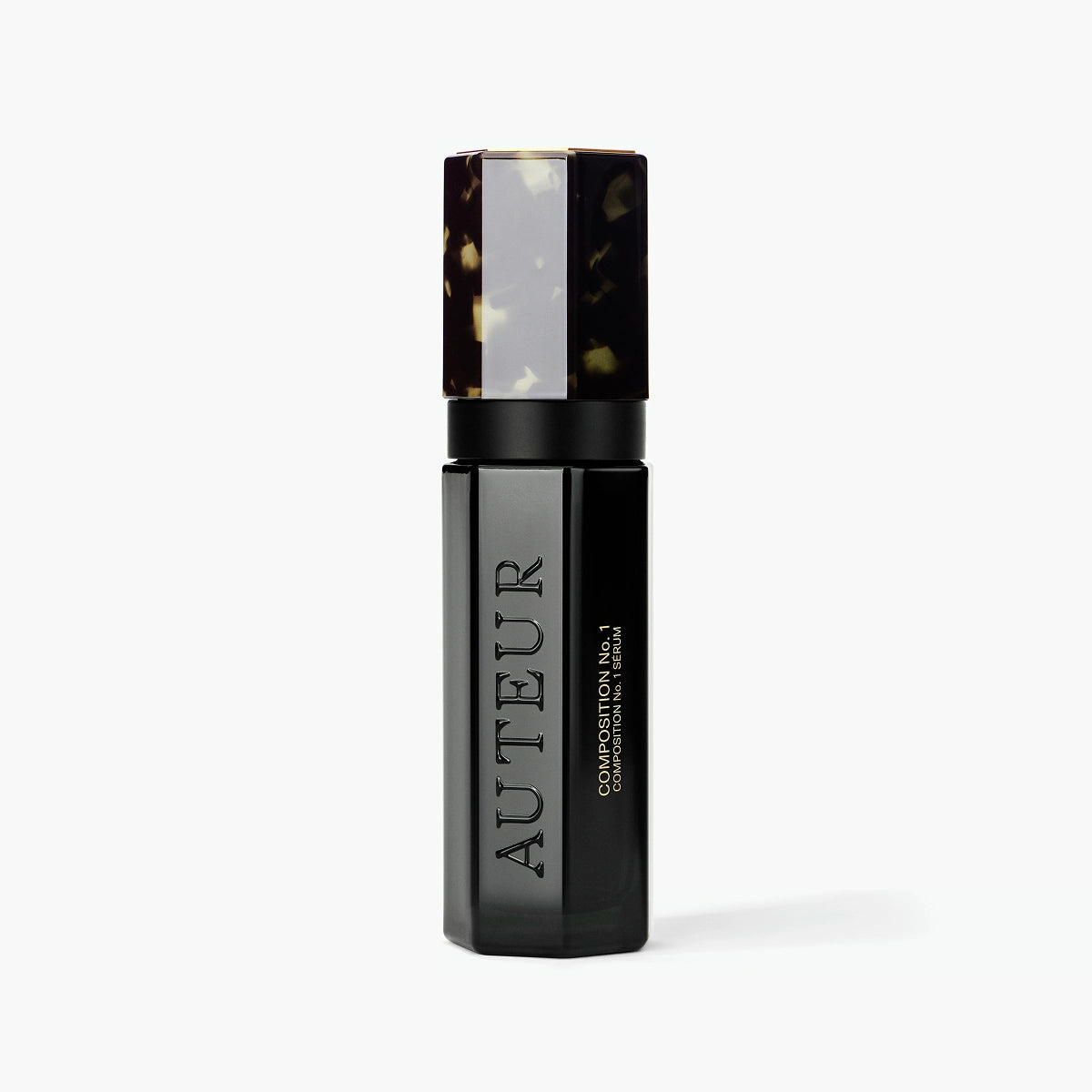
AUTEUR Composition No. 1
Composition No. 1 unites over 40 active ingredients in a single overnight formulation: SYN-AKE peptide, gold pro-collagen peptide, SYN-HYCAN, liquid oxygen via perfluorocarbon technology, encapsulated retinol, niacinamide, Pentavitin, and multi-weight hyaluronic acid. Designed for every-other-evening application, it works in concert with the skin's circadian repair cycle to address collagen signalling, dermal hydration, and cellular oxygenation simultaneously.
Explore the FormulationWhat to Avoid
Not every peptide serum warrants the price it commands. Several patterns indicate a formulation that will not deliver meaningful results for skin over 40.
Single-peptide formulations marketed as comprehensive anti-aging solutions. One peptide cannot address the multi-factorial nature of structural skin aging. If the ingredient list shows one peptide and a long list of fillers and fragrances, the formulation is not serious.
Peptides listed near the bottom of the ingredient panel. INCI lists are ordered by concentration. Peptides appearing after fragrances or preservatives are present at trace levels unlikely to produce clinical effects.
Formulations without delivery technology. Peptides are large molecules relative to the gaps in the stratum corneum. Without encapsulation, nanoparticle carriers, or other penetration-enhancing technology, they remain on the surface. If the brand cannot explain how their peptides reach the dermis, they probably do not.
Heavy fragrance in treatment serums. Synthetic fragrances can trigger inflammatory responses in sensitised or mature skin, directly counteracting the collagen-protective environment peptides are trying to create.
The Selection Checklist
When evaluating a peptide serum for skin over 40, these are the criteria that matter.
| Criteria | What to Look For |
|---|---|
| Peptide diversity | Three or more peptide types targeting different mechanisms (signal, neuropeptide, matrix) |
| Delivery system | Encapsulation, nanoparticle carriers, or perfluorocarbon vehicles that reach the dermis |
| Supporting actives | Retinol, niacinamide, hyaluronic acid working alongside peptides, not instead of them |
| Application timing | Overnight formulation designed for the circadian repair window |
| Clinical data | Published studies on specific peptides at named concentrations, not just "contains peptides" |
| Fragrance | Fragrance-free or minimal; no synthetic fragrance in a treatment product |
The best peptide serum for aging skin is not the one with the most impressive marketing. It is the one that addresses multiple aging mechanisms simultaneously, delivers its actives to the depth where they are needed, and aligns with the biology of when your skin is ready to use them.
References
1. Shin, S. et al. (2023). Age-related changes in dermal collagen physical properties in human skin. PLOS One, 18(12), e0292791.
2. DSM Nutritional Products (2009). SYN-AKE: Clinical Efficacy Study. 28-day controlled trial, 4% formulation, wrinkle depth assessment via profilometry and cutometry.
3. Cassiano, D. et al. (2024). Senomorphic activity of a combination of niacinamide and hyaluronic acid: correlation with clinical improvement of skin aging. Scientific Reports, 14, 15424.
4. Bissett, D.L. et al. (2004). Niacinamide: A B Vitamin that Improves Aging Facial Skin Appearance. Dermatologic Surgery, 31(7), 860-865.
5. Aust, M. et al. (2020). A Supersaturated Oxygen Emulsion for Wound Care and Skin Rejuvenation. Journal of Drugs in Dermatology, 19(3), 250-257.